
![]() |
![]() |
![]() |
||||
| Browse Oral Histories by State | Interactive Map | More Trails |
|
|||||
| |
||||||
|
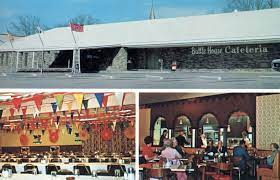
Mitchell’s Ribs, Bar-B-Q & Chicken “Growing up, all our lives on any celebration—it didn’t make any difference what the celebration was, if it was significant enough to be recognized, it had to be accompanied by barbecue. And that was the way things were. Good times were synonymous with family gathering and cooking of barbecue and just having a good time.” – Ed Mitchell Ed Mitchell made his reputation cooking whole hog barbecue in his hometown of Wilson, NC. As a boy, he attended pig pickin’s on his grandparent’s farm, but he came to the business of barbecue fairly late. Ed attended college, served in Vietnam, and worked for Ford Motor Company. When his father became ill, Ed moved back to Wilson to help his mother run the family store, Mitchell’s Groceries. In 1990, Mrs. Mitchell wanted some old-fashioned barbecue, so Ed cooked a pig behind the grocery. Two years later, Ed converted the store into a barbecue stand. He cooked whole hogs and country-style sides, and he offered what he called a “pig bar,” where customers could eat their fill of chitlins, feet, and snouts. As Ed’s business grew, so did his commitment to tradition and quality. In 2003, in an effort to reclaim a taste of the past, he began cooking free-range organic pigs. In 2005, he ran into business trouble and closed his restaurant. But Ed Mitchell didn’t stop cooking. He catered special events and began exploring other opportunities. In 2007, Ed formed a partnership with a real estate developer and opened The Pit, a white-tablecoth barbecue restaurant in Raleigh.
NOTE: What follows is a portion of the original interview that has been edited for length. To download the entire transcript in PDF form, please click here. Subject: Ed Mitchell, Mitchell’s Ribs, Bar-B-Q & Chicken [Closed] – Wilson, NC --- Amy Evans: This is Amy Evans on Wednesday, September 5, 2007. I’m in Wilson, North Carolina, with Mr. Ed Mitchell at his wife’s Bible Store [K & A Church Supply Store] here in town. And Mr. Mitchell, would Ed Mitchell: Okay, my name is Ed Mitchell and my birth date is June 28, 1946. Are you a native of Wilson? I am. Can you tell me about growing up here? Very exciting. All my life, obviously, I lived in Wilson County. And I spent a lot of time with my grandparents [Lawyer and Beatrice Sanders] who had a little small farm. And then they moved into town and so all my history of barbecue sort of stemmed from that. I came from grandparents that had, believe it or not, twenty-five siblings; and my mother [Duretha Sanders Mitchell] was, you might say, the last of their excited marriage. She was—she’s what they call the knee-baby. And so every year, you know, Christmastime, holidays, etcetera, we would always do barbecue; and so barbecue has always been like a fabric of our lives. And most of the people here in North Carolina, especially during the fall of the year when the tobacco crops have been harvested—and getting ready to go to market—different farmers would celebrate by having what we call here a traditional pig-picking, yeah. And so coming up with that, barbecue has just been—what can I say? It’s just been just as natural as natural can get in my life. So then as I got older, obviously, I graduated in 1964 from Charles H. Darden High School and then from there I went off to college. I went to Fayetteville State University in Fayetteville, North Carolina. I went there for three years and then the Vietnam War broke out, and I was called to service; and I spent a tour of 18-months in Vietnam. I came back, was discharged and went back to Fayetteville State and got my undergraduate degree in 1972. And then from there I was recruited by Ford Motor Company; they were looking for Junior NCOs and Officers to get involved in what they called their DD Program, which was a minority Dealer Development Program. And we—we were fortunate enough to be interviewed and we were selected to participate in that program and after graduation off to Dearborn, Michigan, I went and took, I don’t know, maybe a year or so training. And then I had a brief stop in New York—White Plains—and then ended up in Boston, Massachusetts, where I spent about twelve years as a regional manager for Ford Motor Company Customer Service Division. Then from there, after a period of time my father [Willie Mitchell] became ill. And I think this was during the latter part of the ‘80s and my father became ill, and my mother called me, and I took a leave of absence from that job and came back to Wilson and sort of stayed around a while until it was determined that his illness was not serious. [But] then Mother encouraged me to sort of hang around a bit. And then, unfortunately, my father’s illness did take a turn for the worse, and he expired in June of 1990. So now during that time this is—this is kind of ironic because my mother and father all our years even growing up ran a mom and pop grocery store on the corner of Singletary and 301 Highway South [Mitchell’s Groceries] and it—they were sort of like pillars of the community. They would get up, oh my goodness, four and five o’clock in the mornings to go down and open up the store and sell penny candy and cookies, two for a penny, to the kids that was getting on the school bus and that was a big thing to them. And so they did that for years until as I said earlier, my father expired in 1990. So at that time I was working then with the State of North Carolina as a Manager for the Employee Standard Division. So what—what transpired was after we funeral(ized) my father, a few months later my mother, she is the energetic one in the family, always have been—she decided that she was not going to sit home and retire after she lost her husband as part of the team from the running the grocery store. So she decided she wanted to go back into the grocery store business. So then I began to step up to the plate and began to taking the role of my father and sort of escorting her down in the mornings and escorting her back home in the afternoon. So one day I went into the store to see her before I was going off to Raleigh for my job, and she seemed to be a little down….So anyway, I was trying to cheer her up so I says, “Hmm, Mother, what are you cooking?” And what she was cooking was some greens that, basically, was part of their dinner because they got there in the mornings and they stayed there all day, and so she was like preparing this lunch. And she was still in the same routine as if he were still living. And so I said, “Mother, what are you cooking?” And she says, “I’m cooking some greens.” So I said, “Okay, what—what do you want to eat?” She said, “I don’t know. I’ve got a taste for some old-fashioned barbecue.” Well I knew what that meant because, as I said earlier, growing up all our lives on any celebration—it didn’t make any So I says, “Okay.” So I go down to the local meat market and picked up a little small guy. I got a little small pig about, oh maybe thirty-two—I think thirty-two o r thirty-five pounds. The supermarket was named Super Duper. And I came back and—and stopped by the wood stand and then the guy was selling wood was back then—a lot of people were still using wood and coal, so I bought five dollars worth of oak wood to give it the flavor that I wanted. And I went back to the building and went in there and pulled out the old cooker and put the thing on. And so I said, “Well okay, I’ll be back shortly. Give it about three hours or so to cook.” So I came back and finished it up and chopped it up, and she seasoned it, and she and I were having a late lunch. And at that time I was sitting over in the corner enjoying the meal. And someone came in the grocery store and wanted to buy some hotdogs…So the person came in with the intentions of buying the hotdog or hamburger. So when mother got up to go back to the counter to service the guy, he saw the pail of barbecue that we had just finished chopping up. And I was in the corner of the store behind that bread rack and having lunch and so he said, “Oh, Mrs. Mitchell. Y’all got barbecue too?” And so she looked back at me for some sort of confirmation and it was so funny because, you know, I really—my mouth was full and I couldn’t speak, so all I did was nodded at her uh-hmm, yeah, uh-hmm for her to sell the guy some barbecue. [Laughs] Because the only thing that was important to me was to help her make some money. But so she made a guy a couple of sandwiches and he went out the door. And we came back and finished the lunch. And then I went on back to work and came back that afternoon about seven o’clock to escort her home, you know, like I did—previously had done before, since Dad had died. And when I got in, you know, she was all bubbly, packing up her little stuff, getting ready for to close up the store, and I said, “Hmm. I’m very glad to see you had a change of personality and glad to see you’re upbeat.” And she said, “Yep, sure am.” She said, “I made some money today.” I said, “Well that’s good.” She says, “But I sold all that barbecue.” I said, “Get out of here, Mom. You didn’t sell that barbecue.” I hadn’t been gone no more than maybe about four hours. Of course, it wasn’t that much; it was like about—I think the pig yielded about fifteen or twenty pounds. It didn’t yield that much but the fact that it—it got gone in that period of time just by somebody going out and telling it, well I guess was so amazing. So she said, “Yeah, yeah, I sold it.” So as she began gathering her things and getting ready to go out the door, someone came to the front door of the store. And of course we had the door locked because we were closing. And the guy said, “Hello, Mr. Mitchell?” So I put a little bass in my voice and said. “Yeah, who is it?” [Laughs] He said, “Oh, I just want to know if y’all got anymore of that barbecue.” And I said, “No, we don’t have no more today, but we’ll have some more tomorrow.” And that’s how we got into the barbecue business—I mean, commercially. [Laughs] Literally, just nothing but totally act of—grace of God, I guess, because that’s the only thing I can contribute it to. But anyway, so we went on and, of course, I imagine a couple of weeks had gone by and Mother was still after me about cooking more barbecue because none of the grocery items were selling. And then she said, “You know, you go back to cooking this barbecue the old-fashioned way like folks used to do it and you go starting adding some sides to that stuff like folks used to do it, some collard greens and some mustard greens, and some candied yams,” and she went on and on, “rutabaga.” And so—so I said, “Well, you know, why not? You know, let me—let me—.” Everything else weren’t working, so let me see if I can help generate some cash. So I went out and got another pig. And this time it was a little larger; I stepped it up a little bit—about sixty-five-ponder this time. So then I put him on and later on it was done, obviously, and I chopped him up and seasoned it for her, and then she had that to sell. And lo and behold, now I’m curious now—so I come back the next day and just ask her, “Well how’s the barbecue?” She said, “I ain’t got none.” I said, “Get out of here, Mom.” She says, And so we began [getting] more pigs; we began phasing out the grocery store and taking all the dry goods and pushing away and making room for little tables and places for people to sit down and eat, and you were subject to see anybody in there once the word got around that we had this old-fashioned barbecue. And these good sides. And as time went on, then, in 1992—so we played with this thing for about a year-and-a-half. So the latter part of ’92 and ’93 I decided to—let’s give it a run, okay. And so we did that; we actually cancelled out all the grocery items and made it, at that time, Mitchell’s Barbecue. And we went into it full steam ahead. And so I convinced Mom to allow me to expand the existing building into a larger one. So I began buying and accumulating land around the area and making plans for the new addition. So in 2001 we opened up the new addition. ----- So we then got involved with Bill Niman [of Niman Ranch] I think then was on another dimension on all of this stuff, I think was working with the organization on trying to find out where is the best product. I mean to, you know, make the barbecue from—and that’s how I got where I am now; that’s what generated my interest now. All of what I was doing I was making barbecue out of pigs that are raised on today’s methods, commercially confined. And we did a very good job using my family’s 100-year recipe—probably older than because I’m sixty. Yeah, it’s probably about 150 years old, I imagine but—. Then we found out that he was involved with one of the writers, who was a very good person. I met a lot of good people on this venture. I met a writer, Peter Kaminski [author of the book Pig Perfect] and Peter was—he was adamant about “let me find it.” It’s almost like a carpenter: let me find the best piece of wood for you to make this furniture out of. Or let me find the best piece of cloth for a seamstress to make this material, you know, for you to make this dress out of or whatever. So Peter was interested in finding the best pig that didn’t have anything—I mean just natural, you know, and convert it into barbecue. So Peter was the one that told me there was a program going in North Carolina at the A&T State University—small—small farmers was involved in raising pigs naturally. And that may be something did I want to get involved in, because I could get an excellent piece of material or a product to produce a good product using the methods that I was still using that sort of correlated with that type of animal. And then so we were contacted by Bill Niman through the university correspondence there, Mr. Chuck Talbot, and said, “Listen, we want you to cook three of these things and see what you think about them.” So I said that I wanted to get fully involved in it. Because my idea was I wanted to be the guy that did two things. One is I saw that as an avenue to give the consumer back the true original taste of barbecue and secondly, I saw that as being able to now give the little guy an opportunity to get back into the game because the commercial operations had—had basically kind of pushed them out, okay. And for obvious reasons because the demand had to be met So that will do several things. That will give the farmer and especially in North Carolina he had lost his cash crop, which was the tobacco crop, and so it would have given him an idea or two—an opportunity to get back in the game with a product that he can grow slowly like he wanted to and more so he had—for the end-game they had me as a guy that was interested in turning it into barbecue. And my old techniques and slow process techniques would work perfectly because you know I could only cook so much, and when people knew I was out, I was just out. So I had lined that up and that’s what I was going to do. ----- I was immediately going to start changing over my buying of my commercial products to these products, and I immediately started doing that. And then, like I said before, certain things began to happen to me that probably wouldn’t have happened because they really were minor things, but they were turning into large things. I had [a] press conference…and we announced then that in that following March of 2004 that Ed Mitchell was going to start selling barbecue made from free-range pigs. And everybody applauded, and we had invited some guests. And then at the end we had two guys to get up and said to me that I was getting ready to start something. And I said, “No, no, I’m not. I’m not getting ready to start nothing.” “Oh, yes you are. You’re getting ready to start something. You’re getting ready to tell people not to buy my product, and that ain’t good.” So I had a real bad vibes about that, but I really didn’t put a lot of focus on it at the time because I didn’t—you know, I know people sometimes—you can't win the favoritism of everybody on ideas that you got, so I thought he might have been some grumpy person. But I didn’t realize that, you know, maybe—and I don’t have any evidence of this—maybe that there was more to what he was saying than I gave credit to. Because what started happening to me later on then really became what I felt was an orchestrated situation. ----- But where we are now is that we’ve gone to court three times, and we have won all three times and now the last appeal that they did is in litigation now, as it relates to the restaurant here. So what Ed Mitchell decided to do, well, you know, I’ll put that on the back burner and keep moving forward. So this is where I am up-to-date. So now I have gotten involved with a partner, who is going to open up a restaurant with me in Raleigh. And I continue to stay and pursue my idea of getting an opportunity for the little guy to get back into the game of raising pigs and develop a market for him all across this country because it’s important that the little farmer still has something to do in order to stay in existence because that’s the backbone of our country. And it doesn’t make any difference whether he’s in Mississippi, whether he’s in South Carolina, Georgia, Tennessee, North Carolina, South Carolina, Virginia—where—Pennsylvania—wherever he is, okay. What I come up with is that, okay, since everybody in every area you name is crazy about barbecue, let’s create a market of these pigs, especially for barbecue pigs, especially for barbecue. And let these little guys raise them, you know…Okay, yeah, they can't raise but about 250, depending upon the land space that they have. But my God, you put 200 or 300 of them together and multiply that by 500, what they can possibly rai ----- So that’s what we’re working on right now, so you came at a time whereas two things exciting is happening for me is that I’ve gone on, I’ve—the Lord has allowed me to prove my position as it relates to what happened to me because we won three times in court, so we put that on the back-burner and let it work itself out. But now we’re moving to bigger and better things that’s also evolving around my old restaurant. We’re going to open up a restaurant in Raleigh—downtown Raleigh—and it’s my understanding we’re going to call it The Pit. And then I’m going to be the Master Chef there, and it’s going to be the Mecca of all barbecue operations when you come to Raleigh…We got a nice building there, and so I’m excited about that. ----- [Do] you hope or foresee opening a restaurant here in Wilson again? Oh, yeah. Yeah, we feel very strongly that the existing restaurant will come back to us. As a matter of fact, we had planned to use that as a training facility—a culinary school—and I’m going to cater out of that. And, you know, this is my home, so I will never leave Wilson. We plan to use that facility for the headquarters and move forward with the other ventures that we’re doing, yes. So what has it meant these past few years not to have your business in operation here and for your customers to not have your barbecue? Well it was sort of sad in—in the beginning because I feel, you know, that before I really began to look at it differently and understood the divine intervention of this my grandmom used to say to me a lot of times, “Just because sometimes life deals you a lemon, you have to take it and you make lemonade out of it.” I saw this as an opportunity to work and refine my idea about what I wanted to do. I used that time, you know, to really put a lot of thought into what I was doing and wanted to do and was able to get it to the point where I am now. So it has been a plus for me, really, you know, and now I’m able to come back…I have been catering a little bit for special events. I’ve still be involved with going up every year and doing the Big Apple [Barbecue] Block Party, so people have still been able to get some of my barbecue. I just have not been able to have a location where the guy walking the street or whatever—the walk-in and buy. But if you wanted some barbecue and you had a special event, I would cater it for you, and I’ve been doing that. Well and let’s talk, too, about your restaurant when you were open and your pig picking bar that you had there. Yeah, that was a brainstorm that I had there—what I call a pig bar and what I—the way I came over that idea was there’s several parts there on the pig that maybe are not fancied by everyone so we developed this bar sort of like an oyster bar or a seafood bar, where you’ve got all different kinds of seafood. So we will create this pig bar, so that when you come to the pig bar, if you are one of these guys or one of these ladies that weren’t a finicky eater, right, then you have an opportunity to taste some of our delicacies like chitterlings and pig feet and pig ears and pig tails and snouts and things like that, as well as some of the barbecue and whatever. So that gave you a chance to sort of indulge yourself, so to say, in things, you know, parts of the animal that you did not sort of see them as being offensive. And that also allowed me not to display them on the regular bar—food bar—for people that might have found them offensive, so I sort of found a common ground for both worlds. ----- Do you feel that you’re carrying on a tradition of your family’s tradition of cooking whole hogs and also a regional tradition of cooking whole hogs? Most certainly. I feel I’m carrying a tradition of how it started and a tradition of how lifestyles was accepted, and it was a good life. And again it’s authenticity; I mean I can't—if I did anything any different, I would be masquerading something that was not how it was; I wouldn’t be replicating as close to what it should be. That’s why I’m saying, to me—and again I found out that I have to pick my words and be very, very skillful and choice(ful) of my words when I say what—things that I do say because barbecue now has—everyone wants to place claims on it and who did what and when, and so we let everybody just draw their own conclusions. But again, I gave you the best illustration that I could when I gave you how did it all start. We didn’t start cooking ribs; nobody went in there and got the raw ribs out of the pig and started cooking it and said barbecue. No one really went in there and got the shoulder off of the animal and threw the rest of them away and said barbecue. No, they cooked the whole animal when the process started, so that is—that’s how it originated. ----- What do you think your grandparents would think about where you are now with barbecue? Again, that’s why it’s so important to me, believe it or not, not only from my grandparents but historically. I represent so many generations of people that really—and mostly African Americans that really was involved in hard labor which was part of a lifestyle doing chores and doing different things as it relates to on a plantation or even on a farm, okay, that basically a lot of those duties were assigned to those people because those people were recruited as your labor force. So realizing that what they did then was just a way of life, and it really had no significant value, okay, until now it’s fulfilling to me because what they were doing and what they did were important. It may not have been perceived at that time as being important, but it was very important. It was their contribution to who we are as a people, and that’s the exciting thing, you know. Man, it’s a funny thing; when they talk about, again, barbecuing and pig pickin’ and a lot of things, now there was a different kind—just a little bit now—different kind of pig pickin’ and barbecuing in the African American community than somewhat in the—in the white communities to some degree. And what I mean is we had a lot of things, like when the quarterly meeting at the churches—we had a lot of different items on the table that we grew up eating and consuming. And there were other times when there were pig pickin’s going on that you didn’t have all of these things on the table. And that’s why I was able to devise a—my famous pig bar because I remember having a family outing where they had everything you can name; they had pig feet and pig ears and chitterlings and --- Do you have any young people who want to apprentice under you or that you’re teaching your trade? Yeah, you know, and that’s why I am going to start this culinary school, specifically to teach that art—that skill of cooking the whole hog without commercial fuel—commercial fuel meaning gas, obviously. And even so to some degree charcoal because we used to burn wood in a barrel and take the wood cinders and strategically place them under the portions of the animal. So I like to get into that and I think I’m with people now that we’re going to be able to do that. I think I’ve partnered with some people that’s adamant about the history, and I think that’s a good thing. --- To download the entire transcript in PDF form, please click here.
Southern BBQ Primer | Oral Histories | Blog | Interactive Map | More Trails | Contact |
|
||||
| |
|
|
|
|||