
bbq top menu 1

Interactive Map | Oral Histories | Contact | More Trails...         

TN bbq OH MENU

Tennessee BBQ
Introduction

Interactive Map

TENNESSEE
INTERVIEWS

A&R Bar-B-Que

Bar-B-Q Shop

Bill Latham's Bar-B-Q

Central BBQ

Cozy Corner Restaurant

Curt's Smoke House

Germantown Commissary

Gridley's BBQ

Hays Meat Company

Helen's Bar-B-Q

Interstate Bar-B-Que

Jack's Creek Bar-B-Q

Leonard's Pit Barbecue

Liz's Bar-B-Q

Papa KayJoe's Bar-B-Q

Payne's Bar-B-Q

Rendezvous

Richard's Bar-B-Que

Ridgewood Barbecue

Scott's-Parker's Barbecue

Siler's Old Time BBQ

Three Little Pigs Bar-B-Q

Tom's Bar-B-Q and Deli

Tommy Leonard's Bar-B-Q

Woodstock Store N' Deli

“Let me tell you something about barbecue sauce and meat. If there’s a beautiful woman, when she gets up in the morning, once she wash her face she don't need nothing ‘cause her face is already beautiful. But she will put in a little eye shadow and a little makeup just to accentuate her beauty. When a piece of meat is well-seasoned and that meat is cooked really done, the barbecue sauce is just an accentuator to that taste of that meat.” – Jim Neely

Interstate Bar-B-Que
2265 S. Third Street
Memphis, TN 38109
(901) 775-2304
www.interstatebarbecue.com

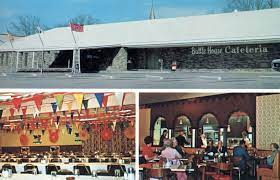
On a whim, and tired of driving twenty-miles across town to buy his Proustian barbecue sandwiches, Jim Neely opened Interstate Bar-B-Que in an old grocery store in Memphis. A successful insurance salesman, Neely had no restaurant experience, just a remembrance of barbecue past.

He fondly remembers when Memphis was a “country town” where his father could raise and slaughter pigs in the back yard. He also, without remorse, remembers having to be served out of the back doors of barbecue joints.  

Jim Neely is the founder of the Neely barbecue dynasty, and his three-decade old restaurant a site of Memphis history.


pig chartWe first visited Interstate Bar-B-Que in 2002 as part of our initial foray into documenting Memphis ‘cue, a project that included photographs, original essays and a smattering of oral history interviews. Visit the original Interstate Bar-B-Que page.


What follows is a portion of the original interview that has been edited for length. To download the entire transcript in PDF form, please click here.

Subject: Jim Neely
Date: July 16, 2008
Location: Interstate Bar-B-Que, Memphis, TN
Interviewer & Photographer: Rien T. Fertel

——-

Rien T. Fertel: This is Rien Fertel with the Southern Foodways Alliance. It is Wednesday, July 16, 2008. I’m here with Mr. Jim Neely, Interstate Barbecue in Memphis, Tennessee. Mr. Neely, can you please introduce yourself; please tell us your name and your birth date?

Jim Neely: My name is James Neely, better known as Jim Neely. My birthday is October 21, 1937.

You are the owner of Interstate Barbecue?

Yes; I am the owner and the founder of the Neely name in the Memphis barbecue scene. I was the first Neely to go into the barbecue business here in Memphis, Tennessee. I was the Neely that put Neely on the Memphis barbecue scene. And I still carry the baton. I’m the drum majorette for Neely and barbecue business in Memphis.

Can we talk about your early childhood in Memphis, maybe what you remember eating here in Memphis, barbecue restaurants, if you remember going any places with your family?

It was a—a to-die-for situation. I mean to be growing up in Memphis, man, I mean barbecue was just capital here you know and it looked like all the old people, man, I mean they just had the barbecue sauces and the know-how to, you know, whereas—you wouldn’t—if I didn’t get no meat it was okay. Just give me some good barbecue sauce and some good soft light bread; I’ll sop it like it was molasses you know. And we had—every neighborhood almost had a local barbecue joint. They were joints at the time but almost every neighborhood, whether it was a black or white neighborhood, there was barbecue places you know that everyone favored. And by the ‘70s, all the old people had their little joints, educated their kids, and made a living for their family—they have died off. And by them not building it to a real business kids they didn’t want to do—keep it alive you know. So the recipes died off with them.

What separated a barbecue joint of—of the ‘60s and ‘70s and before with the barbecue restaurants in Memphis today?

Well the—the word; they were joints. They were juke joints; they were joints where you’d go in and they had the jukebox playing and the people buying quarts of beer, and they was dancing in the floor you know and it—they were joints. Today we have barbecue family restaurants you know on a mega-scale you know where we can seat 100, 150, 200 people and 250 people. Those were just joints, but they’ve turned out a good barbecue and it’s hard to capture that old favorite today.

Do you remember which barbecue joint was closest to your home?

Yeah; Uncle Sam’s right—right down on the—on the next block from me. Uncle Sam was the barbecue place in the neighborhood. Two blocks up in the white neighborhood you had Gus’ Barbecue, you know, and we could get barbecue out of them. Of course we had to go to the back door and someone—the kitchen help would bring it to you but still, you know, we were able to go and it wasn’t no biggie. I mean it’s just the way things was, you know; you know, if you wanted a sandwich you go to the back door. I wanted a sandwich; I didn’t care if it came out the front door or the back door, you know. [Laughs] It’s going to be the same product if it came out the front door.

And as I understand you—you left Memphis for a little while and went out West?

Yeah; in 1954 I was out of school for the twelfth grade. I was going into the twelfth grade, so I went out to California to visit my sister and when I came back home I went to school until the twelfth grade and when we got out for Christmas I joined the Air Force. I did my four years and when I got out of the Air Force, my whole mental ability about the South and the way it was—I couldn’t stay here, so I went back to California because, you know, when you don't know different you can accept things. When I went away and went to Japan and was gone for four years, I knew different and I knew that I was a man—that I wasn’t a boy. And I knew that I wasn’t accepting nobody treating me no other way but that, so I went to California and went to work in the Post Office. And again I didn’t like it ‘cause it was a job and I couldn’t be an entrepreneur. And I stayed there ‘til ’65. I went to work in insurance; then it was like I was my own entrepreneur ‘cause when I got up and put my clothes on what I did was based on my ability and I worked that until ’72 and I transferred to Memphis with a company ‘cause I always said I would never come back to Memphis looking for a job—I’d bring a job with me. So I transferred but only to get here with a job ‘cause my goal was to open my own insurance agency. In 1975 I opened my first agency here in Memphis and I was in the Peabody Hotel. The first of ’76 I opened my office in New Orleans and Baton Rouge. Early ’77 I opened up an office in St. Louis. I had about 80 agents working for me and I was earning high six-figures a year [Finger Snaps]. I was earning high six-figures a year and in ’79 my oldest son was in the Navy; he got real sick. And when he came out he was 50-percent disabled. And then where we’re sitting right now used to be a grocery store and the name of the grocery store was Interstate Drive-In Grocery. I bought this grocery to give my son a job. Well, the little store was so profitable and we were renting for $300 a month for rent; no lease—but it was a good business. So I asked the owner for a long-term lease and he said, “why don't you buy it? I’ll sell you the property.” Well in this property as you can see there was three other businesses. The one next door was a beer joint, the other part was a little hamburger place; so I bought the property and after buying it I started wondering what could I put in the other side. Then it dawned on me that the barbecue in Memphis had just deteriorated. I was driving all the way to East Memphis—which was about 20 miles one way—to buy a barbecue sandwich. And I had a feeling that I could do better from what I was buying and try to recapture that old feeling here in Memphis. So, I opened a barbecue place in the other side; we kept the store going and I was going to help them for about six, maybe eight weeks at the most and get back to my insurance business. As we sit here it’s 28 years have passed and I’m still sitting here with no idea of ever going back in the insurance business now. But I’ve grown this thing to where now it’s a national-recognized restaurant; for the last four years fortunately for me I’m on the Travel Channel weekly—sometimes twice a week. I’ve been featured on the Food Network numerous times; almost every major publication from USA Today to Vogue Magazine, People Magazine, you name it—I’ve—you know I’ve all these different acclaims that I’ve, you know, achieved. But I’m a push person; I push myself to be the best. I challenge myself every day and when I go to open this restaurant you’d be surprised how many old people I talked to and pick their brains for their barbecue sauce recipe. And I’d write ‘em down and I’d come in and I would try it. And I’d bring it out and let my customers taste it and see what they think and I was like probably six, seven years down the road before I decided I had a sauce worth bottling and putting in the market. But by that time I was convinced: I had nailed it. So, from that point on it’s just been history, as to where we are today.

Tell me about the first—the first months in the food business; was—was it hard? I mean to go from—from insurance to food I would think would be completely different.

It wasn’t hard but it was financially wrecking you know. I mean we opened up and we’d go like a weekday, $70, $75, $80 a day you know. Sometimes the wife and I would sit in there and watch a whole movie on HBO between customers you know. And the next thing we know—we’d mess around and we’d look up on a Saturday we’re doing $400—$500, you know, and, you know, so but by me not having overhead—by me being in the insurance business so long, by me still having agents out there in the field, I still had an income from the insurance business with the renewals and everything, so I could afford to be in here during that slim time, you know, and during that time I never dreamed or I never had a vision that one day I would build a business that’s doing multi-million in sales, plus we’re shipping across all over America every night—we’re shipping. Our fax line is hot every day; our email orders is—is up. You walk out in my parking lot; we can probably park 100 cars out here and on any God’s given time over 50-percent of them are from out of the State. I look out and people are up taking pictures of the building. If I’m around here on the weekend or during lunch I must take 20—25 pictures; you know people want to take a picture ‘cause I seen you on the Food Network. I’m from so and so; I’m here ‘cause I saw you on television you know. So it was hard but the reward has been great you know.

What year or at what point did you realize that you have a very special place and that you’re going—you’re going to have a lot of business for a long, long time?

You know I think it was 1989. I had been open about nine years and People Magazine went around America looking for the top 10 places in America. And we came in number two tied with a company in Kansas City by the name of Arthur Bryant. Now when I say Arthur Bryant, let me go back 25 years before I ever went into the business. I was reading an Ebony Magazine one day and they had this story in there on Arthur Bryant. And I was enchanted by him because he was a black man that had a restaurant, a barbecue restaurant that Presidents was coming to eat at. So here it is now 25 years later, and at the time 25 years earlier when I read the—I never dreamed of being in the barbecue business. Oh no; that wasn’t ever nowhere on my periscope sight, you know. And if I hadn’t have bought this grocery store for my son I probably still wouldn’t have been in the barbecue business. But here it is 25 years later and my name is being mentioned in the same conversation with Arthur Bryant. I kind of knew how Peter felt to be associated with Jesus; you know to have my name mentioned with Arthur Bryant was just like Peter having his name associated with Jesus. I mean that’s how thrilled I was because you know it was the epitome of barbecue, you know.

Can you talk about the sauce you serve here? How would you describe the sauce?

The sauce that we use here is a slightly sweet with a tangy, little bit of a bite taste to it. I can make it really bite with the hot sauce but it’s a real sweet pleasant taste. Let me tell you something about barbecue sauce and meat. If there’s a beautiful woman, when she gets up in the morning, once she wash her face she don't need nothing ‘cause her face is already beautiful. But she will put in a little eye shadow and a little makeup just to accentuate her beauty. When a piece of meat is well-seasoned and that meat is cooked really done, the barbecue sauce is just an accentuator to that taste of that meat and it should compliment the meat—not be the determining factor that I got to put barbecue sauce in it just to eat it, you know. You know how you go somewhere in a restaurant sometime and you got to doctor something up to be able to eat it? Well it’s should just be a compliment and the two should be a marriage between the sauce and the meat to make it work together.

The barbecue that you’re trying to make, are you trying to make it how you remember it tasting back in the day?

Definitely—definitely trying to make it that way because man I mean that was—you know, that was a taste, you know. I can sometime now be doing things and think about a barbecue place from somewhere.

-----

To download the entire transcript in PDF form, please click here.


bottom MENU

Introduction | Interactive Map | Oral Histories | About & Contact | More Trails...