
bbq top menu 1

Map Overview | Oral Histories | Contact | More Trails...         

bbq OH MENU

Alabama BBQ
Introduction

Alabama Map

ALABAMA
INTERVIEWS

Archibald's
Bar-B-Q

Boar's Butt
Restaurant

Bob Sykes
BarB-Q

Car-Lot BBQ

Chuck's
Barbecue

Demetri's
BBQ

Golden Rule
Bar-B-Q

Leo & Susie's
Famous Green
Top Bar-B-Que

Rabbit's
Bar-B-Q

The Sparerib

Top Hat
Barbecue

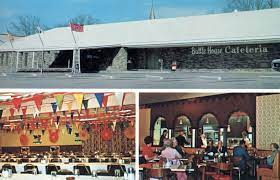
BOAR’S BUTT RESTAURANT

Joe Hubbert (original owner)

Boar’s Butt Restaurant
350 Thorndale Rd.
Winfield, AL 35594
(205) 487-6600

“I was still coaching [football] but I was open every day. I had some girls that took care of it every day for me, and when I would get through coaching and whatever late in the afternoon, I would go in and help work every day. And we was open seven days a week.”

– Joe Hubbert

Joe Hubbert coached football for twenty-eight years. He spent twenty of those years coaching the high school team in his hometown of Winfield, Alabama. He was named to the Alabama High School Sports Hall of Fame in 1999. Before he retired as a coach, Joe got into barbecue. In 1987 he began selling the Boston butts he smoked at home. Just a side-business at first, it soon grew into a full-fledged restaurant. For years, the Boar’s Butt was known as a place for great barbecue, steaks, and chicken. He sold the Boar’s Butt in 2005. Soon after, the restaurant burned. The new owner has rebuilt but to Joe, it will never be the same. His years of coaching and his relationship with the community of Winfield made the Boar’s Butt something special. Decorated with team photographs, newspaper articles, and other memorabilia, the Boar’s Butt of his day was a shrine of sorts. Today, the Boar’s Butt is open again under the new owner. But Joe Hubbert keeps his memories and his barbecue at home.

The Boar’s Butt is currently owned by John Evers.


Listen to this 2-minute audio clip of Joe Hubbert talking about how he got into the barbecue business. [Windows Media Player required. Go here to download the player for free.]

NOTE:
What follows is a portion of the original interview that has been edited for length. To download the entire transcript in PDF form, please click here.

Subject: Joe Hubbert
Date: September 28th, 2006
Location: Mr. Hubbert’s home – Winfield, AL
Interviewer: Amy Evans

---

Amy Evans: This is Amy Evans for the Southern Foodways Alliance on Thursday, September 28th 2006. I’m in Winfield, Alabama, at the home of Mr. Joe Hubbert. Mr. Hubbert, if you wouldn’t mind stating your name and also your birth date for the record, please, sir.

Joe Hubbert: Joe Hubbert and my birthday is—an old man. I am sixty-nine years old. Birthday is March 30th [1937].

I’m in your home here in Winfield, speaking to you about the history of Boar’s Butt Barbecue, which you started. But first, if I may ask you, Winfield is your hometown, correct?

Yes, ma’am. I came back here in [nineteen] ’73—January 12th, to be exact. I was in Georgia coaching [football], and the superintendent called me and wanted me to come here to my home, and I stayed her and coached for twenty years and a half.

---

And so when you came back to Winfield, I understand that you started the Boar’s Butt Barbecue as a stand, initially. Was that kind of a hobby thing that you did on the side?

I had one built. I had never anything to do with [the restaurant business] but always thought about doing it. And I borrowed the money to build one on wheels, and they let me park down there next to Wally World [meaning, Wal-Mart]—I call it Wally World—and I stayed there about three years. And a banker offered me a place where the present [location] is right now and it’s log—it was a log building. And we stayed, oh, I’d say about three years, and I began to enlarge. So we built a big room adjoining, and then later on we built another room and it was private seating and whatever, and then we built a new kitchen. And everything was going real good and I—like I say, I started in [nineteen] ’89 in the building. And it has been good to us and the family—very good.

Now when you started in ’89, was that the original building or that’s when you expanded?

That’s—that’s when I moved into the—I was renting it. I just wanted to see how it would go, and it became where the people were lined up out the doors. And they was standing out there, and the air-conditioning was going out with them too. So anyway, that’s when we started in the other building and we left the other—I sold the one that was on wheels.

What year did you start the one on wheels?

[Nineteen] eighty-seven…I was still coaching. I retired in coaching in [nineteen] ’93—spring of ’93.

So what came first then, the—the building or the—the barbecue? Were you already making barbecue?

No, I haven’t—I had a barbecue pit just before and it’s still out here [at my house], and I’m thinking about building a new one. But the bricks is about, you know, all wore out up here behind my house here, and we cooked a lot of good meals with it.

So you were cooking barbecue a lot before you opened the restaurant, so it—to you, you saw it as a viable way to cook and to make extra money—and you’re nodding your head, yes.

Yes, ma’am.

When you were still coaching and you opened the barbecue place, were you always making the barbecue yourself?


Yes…Right. We had the one on wheels we’re talking about now, and I cooked all of the barbecue here at the house in the pit I had here.

So what kind of schedule would you keep? Were you only open on the weekends or was it a daily—?

I was open every day. I had—we had—I had some girls that took care of it every day for me, and when I would get through coaching and whatever late in the afternoon, I would go in and help work every day. And we was open seven days a week.

So what kind of schedule would you keep here at the house of—of smoking meat?

Well it depended on how the meat was moving, you know, but we could cook several pieces of pork, and we usually would do it four or five times a week.

---

And what cuts of pork were you doing? Was it just Boston butts or—?

Butts—we used butts. Sometimes we’d use another piece, but most of the time butts.

So was there ever an occasion where you would do ribs or anything?

Yes, ma’am. In fact, we won second [place] in the State of Alabama.

---

So if we can talk about when you were doing barbecue at the house, can you describe what kind of working style you have or how you like the meat to look and kind of describe your process a little bit?

Well I want it to be still a little pink, you know, but I want it done; we didn’t want to burn up meat. And it takes sometime really to cook good meat, usually twelve to fifteen hours, something like that.

And you’d baby-sit it the whole time yourself, would you?

No, I could set it and usually I would—I’d have to put coals on it. That’s all we’d do is most of the time just put coals, and it wouldn’t burn. It would just smoke the meat, and it was very good.

Now do you use wood coals or do you use charcoal?

We use nothing but hickory.

Where do you get your hickory?

We bought a lot of hickory wood over at the Boar’s Butt, I’ll tell you. And the name—one day I was bringing this up, now the name Boar’s Butt it just hit me one day. I said, “Boar’s Butt, so I’m going to cook butts.” And it was a preacher in Guinn, Alabama, that said it was—he didn’t like that name Butt. You’ve got a lot of different other things called butts, and he took it wrong and we—the newspaper wrote up a story about it, and I mean we never did hear nothing else from that preacher.

---

And so can you describe a little bit the brick pit that you used to have here that you used to work on—what that looked like and how many butts it could hold?

Oh, we probably can—it was all—it was brick and we could put about twenty on at one time.

And did you build it or have it built?

Well I had it built; I’m not a bricklayer. I had a guy that did the—the bricklayer.

Did you have a hand in designing it, then?

Yes. Another friend of mine, he really helped me. I’d go to his house at parties and—he’s the one that got me started, and they cooked wonderful food. And we’d go to football games and he did all the chicken halves and this thing. And it was very wonderful.

May I ask his name?

Mr. Bowman. He’s—he is deceased and a wonderful guy—he and his wife.

---

And so when you were talking about when you had the small stand on wheels and you had a couple girls helping you out—

It wasn’t a stand—it was a building on wheels.

How big of a building on wheels?

Oh, it was probably about fifteen [feet] by eight [feet]. Then we added another portion where we cooked on the outside; it was screened in and all that—had to in the State of Alabama. You got to get—make sure everything is correct. They’re pretty strict, and I don’t blame them. That’s the way it should be.

What else were you selling in the beginning? Were you selling any sides or anything?

We finally moved up to steaks. We—we’d have steak, rib-eyes—and I never will forget one time, we started it and they were backed up standing everywhere, and I couldn’t cook them fast enough. We’d use rib-eyes. We did—got to where we were selling rib-eye sandwiches, and we did that all the way through.

So when the Boar’s Butt was in business and you were owner, it went through how many expansions before you retired from the business?

We had a porch at one time. What we did—we took the porch in first, and then we built a large room onto the log portion. And we—we the next thing—we built another one and that was our major thing for to seat—we could seat approximately 500 people. Then we enlarged the new kitchen—total new kitchen and that—that is it.

Can you describe what the interior of that log part of the building looked like when you got in it?

Well the logs—people liked the logs—that portion. And we had pictures. We lost so much when it burned; it’s unbelievable. He—the guy that bought it [Joey Foley], he wanted to let us leave it on the walls and, at the time, I didn’t have any other place to put it. And when it burned the one room—the last room that was built—we did not have any damage to that, so I got everything out that morning when it was burning.

Now just to back up a little bit, you—you sold the building to—Joey Foley is the current owner, and it burned after the sale. What year was it that you sold the business?

January 5th ’05. [2005] Yeah, this year—January, it will be the second year he’s had it.

And so when you retired from the business what—what brought that on? What made you want to sell it?

Well, you know, you get kind of tired, seven days a week and hours are—usually I’d be there about 7:30 or 8:00 [in the morning] and most of the time I’d be there ‘til 9 or 10 o’clock every night. And that’s kind of—gets old. But I miss it now. I miss the people. But I don’t miss a lot of the other things. Labor is tremendously hard to get, but we were fortunate; we had several real good employees.

How many employees did you have at its peak before you sold it?

We would use about thirty people at different times on—. Especially Sunday we had a lot of people working—a lot of food runners getting it out.

Winfield is a pretty small town. Do you know the population of Winfield?

About 5,000 [people].

So how do you think you were able to build this reputation and sustain this really large restaurant in this small town?

Well I was—what really got me into it, we had no place that had good food. It was terrible. And we—I just thought, you know, no steaks, no pork. We sold no telling how many tons of chicken breast. We marinated all our chicken breasts. And that was a big one, too. And grilled chicken salads, that was very big. And chicken halves was good too.

Would you say that you cooked and sold and served the food that you wanted to have yourself?

Oh, yeah and we—we did fish: grouper, we did catfish. And we did steaks, and we did all kind of food—vegetables and meats at lunch. We didn’t do breakfast. It would be ready—getting ready for the lunches every day.

So do you think that people travel from like Guinn and Jasper [Alabama] to—just come to the Boar’s Butt?

We had a lot of people out of Mississippi to come over: Tupelo—just a lot of different places over there that would come. And we’d have a lot of people that would stop in. And we had a lot of people out of Birmingham, Tuscaloosa, just a lot of surrounding places.

They’d just make a special trip just to come by the Boar’s Butt?

That’s correct. And a lot of times during this kind of season like it is now [in the fall], a lot of football teams would stop and eat with us. And then the basketball people would stop with us out of Florence [Alabama] and just traveling, and they would call in and set up after the games was over and whatever and a lot of times would eat a pre-game meal with us.

Was that, do you think, part of who you were as an owner, being a coach also, that—that was kind of a built-in customer base?

Possibly, because I knew a lot of the coaches, and I guess that’s one reason. And we had a lot of coaches meetings there and a lot of superintendents and principals’ meetings there. And we had a lot of other meetings there: Lions Club and things of that nature.

And would you decorate with pictures [from sporting events]?

Oh, we—we had hundreds and hundreds of pictures. When we get through here, maybe I can show you some of them…We can stop in town, and I can show you some more that didn’t burn. We had a lot of college coaches that just burned and are gone; we had a big tractor sign there that was 19—about 1946 and it was hung up in the ceiling in the first compartment there, and it was a very neat thing and it burned. Everything like that up front went under, and we had a lot of things I could never gather back.

Now you were telling me earlier that you haven’t been back to the Boar’s Butt since you left it.

No, ma’am.

Would you hear or know if things are pretty much the same—if the food is the same or some of the employees are the same?

I really don’t want to talk about that food. I don’t have the business anymore.

---

So what is one of your fondest memories or a couple of them of—of your days in the—the business?

Well just being around people. I like to be with people…We would take Alabama coaches and stuff, they’d come by and stuff, and Coach Wimp Sanderson would be stopping in and out and it was always fun. Some Auburn coaches would be there recruiting and whatever. And even Mississippi State—we had Bart Hyche that played down at Mississippi State—basketball—very good. And we had a big football player that played down there for Mississippi State and there’s just—it’s just a going-on thing.

---

So how would you describe the connection between barbecue and football, especially being a coach who owns a barbecue restaurant—or did?

Well you think about a lot of people, when they’re going to games, they do a lot of cooking. It may be rib-eyes, or it may be pork. And a lot of people do that, and I guess you’re aware of that being in Oxford now. And it’s wonderful; people love it eating outside like that and, of course, the excitement of the game.

---

With all this business management that is associated with owning a restaurant, if you would say that your coaching influenced your management style?

I don’t know about that. [Laughs] I don’t know; I don’t really know. The big thing is make sure you’ve got good, clean people in the kitchen and get along with each one and it’s—you got to be there every day nearly to keep it rolling. Sometimes I’d leave, and it wasn’t good…When my daughter [Kim] came aboard, it really helped and she—it took her some time to learn what to do when she came on. Now she’s like this.

---

Now the Alabama Division of Tourism and Travel in last year, 2005, they declared it the Year of Alabama Food, and they have a list of all these places throughout the State that are must-visits for certain dishes, you know, and the Boar’s Butt is on there for barbecued pork. And so I wonder if it’s, you know, it’s that popular and the state has incorporated something from your restaurant into a state kind of tourism initiative, what that means to you?

Well I guess people liked it—the taste of it, I guess. We—a lot of times we had to move a lot of pork at one time. You know, traveling and—out to different hometowns. The atmosphere in our place was unbelievable because of all the pictures that we had on the wall and all the different plaques. I had several plaques on the wall of my son, my daughter; they were athletes. And just a lot of people—lot of people like that. And they would look at the walls—on the wall of the pictures and the things I just mentioned.

So you think the environment that people eat in has a lot to do with their enjoyment of the entire experience?

I’ve heard people many times say how awesome the pictures—the way it is in here. They like the atmosphere. And we had big screen TVs, and if it was football and basketball, they liked it—especially football. The rest of it much they don’t watch it a lot.

---

So how would you say your barbecue when you had Boar’s Butt was different from other barbecue?

Well I thought it was better. It’s good.

---

So what are you doing now that you’ve retired from the restaurant business?

Whatever my wife tells me to do…I love football, basketball, baseball. And we got a grandson, and he’s all the time wanting to go with Pop-Pop. And we go to a lot of those. I don’t go to college anymore. I haven’t been to a college game now since probably in [nineteen] ’98 that I remember.

Do you still cook?

Oh yeah, I love it. I like cooking for people. We’ve—nearly every good football game that Alabama has, we will have this room full of people.

And you have a pit in the back still, I think you mentioned.

Yeah.

---

Well is there anything that I haven’t asked you about the Boar’s Butt and your time in the business that you’d like to add or talk about?

Hmm, I really don’t—I really enjoyed it. It keeps you busy and we—we had some good people, and I thanked them for working for us. And sometimes it’s tough. It’s—sometimes it gets busy, busy, busy working and getting the food out at the right time, the right kind of food. And I don’t know how it’s going over there now. I have no idea. They have a lot of cars at times—a lot of cars. But we’re not involved in that anymore, and I couldn’t speak for anything.

---

Is there anything else that you’d like to add?

Well one thing I will mention to—I’ve had the football team, pre-game—before always at the Boar’s Butt and those kids liked that, and I thought that probably helped because of the atmosphere. And we had good kids here, and Winfield is a wonderful school, and we’re usually ranked in the top five in academics in the state of Alabama and we have good facilities…And we had a lot of times teachers that have—like me, they don’t—not teaching anymore but they would have their meetings over there and that pleased me. And a lot of—lot of coaches and that was a good—when we had coaches meetings, I enjoyed those. And also the principals. And you’d talk with a lot of the principals and superintendents when they were there. And it just—it’s just—if you’ve never worked in a place like that it’s—it’s wonderful to meet people…And just a lot of different things like that that happened, and people just drop in and just want to talk or say hello.

In all your years of coaching and then all your years of owning a restaurant, is there one that’s more satisfying or was—has been more satisfying to you or would you rank them the same?

Talk about comparing athletics? I would say the athletic program, really. I miss the kids. But I don’t miss the rest of it, but the kids, you know, you’re there to help them. I used to tell them, I’d say, “I’ll tell you what fellows,” I said, “I’m here to help you.” I said, “You might not like my ways or I’m too tough or whatever, but I’m trying to train you to go up and be a man.” I’ve got doctors—excuse me—I’ve got several doctors, I’ve got preachers, I’ve got people in politics—just all phases of life over the years. It’s unbelievable.

---

To download the entire transcript in PDF form, please click here.


bottom MENU

Introduction | Map Overview | Oral Histories | About & Contact | More Trails...