
bbq top menu 1

Browse Oral Histories by State | Interactive Map | More Trails

bbq OH MENU

Southern BBQ Primer

All States

Interactive Map

TEXAS
INTERVIEWS

Texas BBQ Introduction

Restaurants

Artz Rib House

Barbecuties

Ben's Long Branch

Church of Holy Smoke

City Market

Cooper's Old Time Pit Bar-B-Que

Gonzales
Market

House Park Bar-B-Que

Inman's Ranch
House

Kreuz Market

Louie Mueller BBQ

Meyer's Elgin Smokehouse

Mi Madre's

Pok-e-Jo's

Ruby's BBQ

The Salt Lick

Sam's Barbecue

Southside Market

Taylor Café

Purveyors

Burton Sausage

D. Wiley, Inc.

Dziuk's Meat Market

Forestry Management

Graham Land & Cattle Co.

Meyer's Sausage Co.

Smokey Denmark Sausage

ruby's BBQ

PAT MARES

RUBY’S BBQ
512 W 29th St
Austin, TX 78705
(512) 477-1651
www.rubysbbq.com

I think every barbecue place—there are so many barbecue places in central Texas, and every one has their little specialty or focus. And at the time, we figured blues and barbecue—you couldn’t go wrong.” – Pat Mares

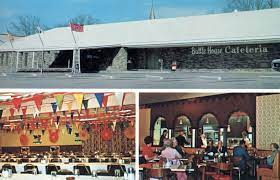
Pat Mares was born in 1951 in Schuyler, Nebraska.  After working in food most of her life, Pat and her husband, Luke Zimmermann, opened Ruby’s BBQ in 1988, just north of the University of Texas at Austin campus on the edge of the Hyde Park neighborhood.  From the restaurant’s early days to the present, Ruby’s BBQ has been deeply entwined with the Austin music scene.  The presence of Antone’s blues club next door was key to their choice of location; though Antone’s eventually moved downtown, the Ruby’s dining room still keeps blues music playing on the stereo, and their food fuels the performances of many local and touring musicians.  Pat and Luke also cater to the diverse neighborhood and university crowds; one of their signatures is their all-natural beef brisket, and they serve chopped beef sandwiches, which are favorites of students on a budget.


Listen to this 1-minute audio clip of Pat Mares talking about the origins of the Ruby’s BBQ name. [Windows Media Player required. Go here to download the player for free.]

NOTE: What follows is a portion of the original interview that has been edited for length. To download the entire transcript in PDF form, please click here.

Subject: Pat Mares
Date: June 19, 2007
Location: Ruby’s BBQ– Austin, TX
Fieldwork Director: Dr. Elizabeth Engelhardt
Fieldwork Team: Lisa Powell

Produced in association with the American Studies Department at The University of Texas at Austin and the Central Texas Barbecue Association.

---

Pat Mares: Hi, I’m Pat Mares, and I’m fifty-six years old, and the founder and owner/operator of Ruby’s, along with my husband Luke [Zimmerman].

Lisa Powell: So, could you tell us a little about the history of Ruby’s?

Well, we opened in 1988, in November. We took over the lease of the property we’re at, which had been Fajita Flats prior to that.  […] We were in there for a couple ruby's BBQmonths, and we had the brick pits built, which is, of course, a big part and the main staple of the barbecue business. We actually modeled those pits on Kreuz’s brick pits in Lockhart, where the fire pit is to one side and the grates and grills carry through and you’ve got a flue at the other end, so the process is actually low fire, low heat, and a lot of smoke. And we experimented on those pits for about three weeks or four weeks before we opened, and had to get them seasoned before we opened. We opened in November, and it was a really depressed economy in Austin, and most of our friends thought we were really crazy. I heard later that in 1988 there was about ninety percent failure of new restaurants in Austin, so. But we survived those few months. We were very lucky. I feel like in retrospect—I think for the first couple of years we were working all the time and didn’t have days off, but of course we were lucky to have our own business and be doing the work that we were doing, and really enjoyed it. But definitely, it was difficult….

The location we’re at, at Twenty-ninth and Guadalupe—right next door was Antone’s nightclub at the time we were opening, which was one of the deciding factors in opening in that location. I think every barbecue place—there are so many barbecue places in central Texas, and every one has their little specialty or focus. And at the time, we figured blues and barbecue—you couldn’t go wrong. So, that was one of the reasons we opened there. And I know Clifford [Antone] used to give us some plugs from the stage, and we’d have some of the musicians coming over between breaks, and that also within the year led us to expanding our hours to where on Fridays and Saturdays we’re open until four in the morning. Those were the old days [Laughs]. Probably for about five years we did that, until times changed. There were more places around town that were open twenty-four hours. Some of the blues musicians that were a big draw and were getting a lot of people to that area, some of them were passing away, and the crowds were different and the scene was different. So one year we cut back to three o’clock, and then one year two o’clock, and then finally, about ten years ago, I think we went to midnight. So, our current hours are eleven a.m. to midnight, seven days a week. But going back to Antone’s, again with the blues, that’s been a major factor, and I think the focus of our establishment and one of the things that keeps people coming back, or one of the things they enjoy about Ruby’s, in addition to the food experience. I’d say the other thing about Ruby’s is the food in particular. Within a year, we went to using all natural beef brisket.

---

Well, if there is anything you’d like to share about the history of the recipes, or how you decided to use the recipes that you use—I don’t want to ask you to give any secret recipes—[Laughter].

The majority of the main staples were actually Luke’s recipes the—barbecue sauce, the rubs for the meat, the barbecue beans, the chili. Most of those were his recipes. The potato salad came about—we kept fine tuning the traditional potato salad and talking to the guys who worked at Antone’s, who worked the back door, bar backs. They were from the East side and they would come over and taste the potato salad and say it did not taste like Mom’s. And of course that’s probably—particularly in Texas, I think the potato salad is particularly hard because you’re always being compared to Mom’s potato salad. But anyway, they’d say, “It doesn’t have enough egg or enough mustard,” and Luke kept changing it up until we settled on the current one. I’m not sure they’d still say it’s as good as Mom’s, but that’s how the current potato salad came about. Some of the other recipes were contributed through the ruby's BBQyears by staff, the collard greens and the vegetarian chili. Some of the newer items, probably, I had more of a hand in. We’d start with the basic recipe then play around with it until we came up with, I don’t know, pulled pork, sweet potato pie. I probably did more of the dessert end of it. I have a Czech, farm background from Nebraska, and so grew up with a lot of fresh produce and cooking and baking when I was young. So, I probably was more into the dessert line of that and then, some of the vegetarian food, which sounds a little bit odd, also, being a meat-intensive restaurant. But the area we’re located in, being near the University [of Texas at Austin], and with Wheatsville [Food Co-op] up the street, and it just seemed like something we needed to do. A lot of times with barbecue, you have family, friends getting involved, and it’s groups of people, and you inevitably do have vegetarians in the group. So we developed—we’re actually known for our black bean tacos, that’s one of our vegetarian items. And I just got an email from VegAustin [a vegetarian clearinghouse website, www.vegaustin.com] saying that we’re listed, and I’m a little surprised about it, being a barbecue place.

---

So, you’ve mentioned a couple of times the proximity to the University of Ruby’s, and how that has influenced your menu in some ways. What other sorts of ways has being so near to the University sort of influenced the restaurant?

Yeah, I can think of a couple ways. Certainly the food, like I said we’re developing more vegetarian items, and hand-in-hand with that, it’s not just that there’s a market for that in our area, but it’s helped a little bit to cut down on our food costs, because I don’t think that people think about the fact that barbecue restaurants are really meat intensive, and meat is expensive. I know we have much higher food costs than somebody who’s in Italian food, Mexican food. Just by its nature you have higher food costs. So obviously, introducing more side dishes or more vegetarian items, we’ve introduced salads after a certain point, all that’s going to help to temper the food costs a bit in terms of meat intensiveness. But definitely, besides like vegetarian items and tacos and salads, one other way it influences us is in our hours. Initially, I think we might have only been open till ten and pretty quickly expanded to midnight. Number one, just to be able to pay rent and pay bills you want to be open longer, and Luke and I were, you know, a large part of the work force. So we’d be open, but we also realized that in our neighborhood you have a lot of young people and they’re up late and out late. So, while a lot of places close at ten we chose to stay open till midnight. And sure, sometimes even now we’re a little slower in the last hour or so, but there are definitely times when we’re busy at the later hours, so that’s definitely been an influence. And I think I mentioned that we decided within a few months after ruby's BBQwe opened to go with the all-natural beef. When we started out, we were using I think a Granada beef, and we tried a Black Angus. Most barbecue places use Iowa Beef Packers beef, which is a decent product, but we wanted to go a different route and do something special. I guess, being handcrafted food, we’re always trying to look for something else away from the mainstream. […] And it was Bradley 3 Ranch of Childress, Texas, the B3R brand, and we were really happy with them. The meat itself was a good product to start with. It seemed to pick up the smoke flavor really well. It was tender and really a different texture from what we had been using, so that led us to contact the B3R. And we started to use the brisket from them within the first six months or so that we were open. We were with them until a year or year-and-a-half ago they sold out to Coleman Beef of Colorado, so now that’s where we’re getting our beef. And I don’t know if—to say that—obviously, I think in our neighborhood that works well, there are a lot of people concerned about health, and certainly there are some folks who will say that they only eat brisket at Ruby’s because they know we do use an all-natural product. And I’m not sure if that grew out of a factor of the neighborhood or not, but I think people knowing about, thinking about food promoted that.

So, continuing to talk about the meat a little bit, you mentioned the construction of your pit at the beginning of the interview. Could you, kind of, maybe walk us through the process of cooking meat, of cooking your meat, and what is unique about the Ruby’s method of meat cooking?

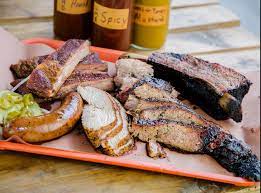
There are definitely a few things that are unique about it, but I think to the barbecue style and the traditional wood-smoked meats of the Texas style, I don’t know if it’s unique or that different from other folks who do the same thing. We do have brick pits. In fact, I don’t know how many barbecue places in Central Texas still use brick pits, I think we’re one of the few and particularly in the style we use them. One thing about cooking in brick pits, obviously they’re large and bulky and they don’t have rotisseries on them and you can’t smoke that much on them. So within a year or two after we were open, we had to add another pit. The original one was inside of our kitchen in a storage room, and then—now we have built another pit outside. We do use all wood, and it’s, like I said, a lot of places to do volume you pretty much have to go to another type of smoker, which many places use which do a huge volume of business, which has a rotisserie and it’s operated with gas or electricity maybe and very little wood, but you can cook forty briskets at a time. You set a time and temperature and basically walk away from it, and you can cook your briskets. Obviously with the type of pits we have its hands on, somebody has to be monitoring the fire at all times. We use, right now, post oak and oak wood. We started out using oak and mesquite but after a while dropped the mesquite. It has sort of a tangy flavor it would impart to the meat, not really acidic but something like that.  And in the end, we decided that particularly for the brisket, the oak worked well. So we do use oak wood in our pits, we go through a cord probably in a week. The smoking process using wood is completely hands-on, and it varies from day to day. Sometimes we get wood that’s greener and usually you’re going to get a lot of smoke and it’s hard to keep the fire going and you might not get a lot of heat, so you have to adjust everything. Everything is going to take longer to smoke. Other days, the wood that’s wet, you have to try to figure out a method of figuring out how to dry out the wood for a bit, which we’ll put it on top of the fire box for a little bit to try to dry it. If it’s a really damp day out, with heavy air pressure, the smoke is not going to pull through the flue as well and it’s going to keep the smoke down, and it affects the temperature, obviously, and how the heat is drying, as opposed to a crisp, hot sunny day when everything is going to burn hotter, if it’s drier. So, there’s just a lot of factors in that. You try to maintain probably around a 200-degree fire, somewhere in that neighborhood, but it’s definitely going to fluctuate. Sometimes they get running really hot and you’re going to put a little water on it. Other times, you’re trying to maintain your coal base. We do put briskets on every night anywhere between nine and eleven in the evening and we smoke overnight. The folks who are closing and running the pits have got their technique that they’re passing down from one to the other, of setting their overnight fires. You get a good coal base, get a hot fire going, and of course we have a certain type of logs that we use for overnight cooking and different type of wood that’s bigger split than the one they use during the day when they’re there to monitor the fire all the time. We use larger logs at night. They have aruby's BBQ method of stacking them, and that will keep the fire going through much of the evening. So, when the morning crew comes in the first thing they’ll do is get the fires going again, continue smoking. The briskets smoke anywhere from about twelve to twenty-four hours. It really depends on the size of the brisket, the density, and I said a lot of things affect it, like the outside temperature, the humidity, the wood, whether it’s dry or green, but they do take a long time to smoke. And that, of course, is what makes them tender, it takes a long time at a low heat. Our ribs—we smoke baby back ribs and St. Louis cut spare ribs—and those probably smoke an average of five to six hours, I guess. We do not put any type of dry rub on those ribs. They’re just prepped and put on the pits, on the grates. The briskets are prepped before they go on and rubbed with a dry rub mixture. Again, that’s a recipe that Luke came up with, and that’s put on the top side of it, to give it a little bit of seasoning as the meat cooks. The chickens—we smoke whole chickens—large three-and-a-half-pound chickens. A lot of barbecue places use a two-and-a-half-pound chicken, but we found that they really dry out so we use a larger chicken to keep it moist, and these are smoked for about four or five hours. Again, these are averages, sometimes they’re done in four, sometimes six or seven, depending on all the factors we discussed earlier. In the last few years, we started doing pork so we smoke whole pork butts, and added ham to our menu, and we smoke whole turkey breasts and all those just have their own peculiarities. Most of them, we just put on and smoke and there’s not a whole lot of preparation. We serve the sauce on the side, figuring in most cases if people want a little bit of seasoning, just the natural smoking process develops and imparts a flavor to the meat by itself. We haven’t gone the route of Kreuz’s where we have no sauce on the table and few side dishes, but nevertheless, there’s definitely something to be said for that style.

---

So, a little earlier when I first asked you about how you cook your meat and what makes it unique, you referred to the central Texas style and it maybe being not so different from what other people in Texas are doing. So, I guess my question then would be, what are the characteristics of central Texas barbecue and what makes it different from other barbecue?

Well, central Texas, when I think of central Texas barbecue a couple things come to mind. One is the smoking process, which I consider smoking, I guess, which would be as I indicated earlier, the firebox to one side, and you’re not cooking over direct heat. Rather, the heat and the smoke is pulled through the pit, where you’re actually smoking meats. And another thing that I frequently think, and I guess this is all tied together, and part of it has been our interest and focus, but I think of beef and sausage. That really is a Texas tradition. You don’t find brisket in other parts of the country. Somewhat, a little bit in Kansas and Oklahoma, but most other parts of the country, particularly the Southeast, is going to be pork barbecue. So, definitely brisket is unique to Texas. The beef, again, in sausage, and that along with the smoking process, seems to have come from the German and Czech meat markets and their tradition of making sausage and smoking meats to preserve meat. That’s, I guess, what I think, basically is central Texas barbecue. There is another style where they cook more over coals. They actually burn the wood down to produce coals, I think Cooper’s in Llano does that, and then you spread coals. You’re cooking a little more over direct heat, but it’s a different style. I think some people might call that ruby's BBQcowboy barbecue. But that definitely you see that in this area, with those coals through a barrel smoker, and you cook a bit more over direct heat, that’s another style, and I would say that’s probably more of a central Texas style as well.

---

So, at any point, if there’s anything you’d like to add, feel free about it.

I might mention where the name came from—we frequently get asked about that. We did not want to call it Luke’s or Pat’s barbecue. And at the time that we were actually working on the building itself and developing recipes before it had opened, we were tossing around names with our friends, and we had been watching a Marlon Brando movie from the fifties, The Fugitive Kind. Joanne Woodward is in it. And it’s set in east Texas or western Louisiana. And at some point they go juking. They go to a juke joint happens to be called Ruby’s Barbecue, and a scene develops there. But of course, trying to come up with a name that struck us, Ruby’s Barbecue, we had been thinking of calling it Market Barbecue, Waller [Creek] Barbecue, and talked to several of our friends, but almost hands-down they felt that Ruby’s Barbecue was the best-sounding name. And as a result I’ve sort of become Ruby, there are a lot of customers who call me Ruby, and they know it’s not my name, but I respond [Laughs].

---

To download the entire transcript in PDF form, please click here.


bottom MENU

Southern BBQ Primer | Oral Histories | Blog | Interactive Map | More Trails | Contact