
![]() |
![]() |
![]() |
||||
| |
||||||
| |
||||||
|
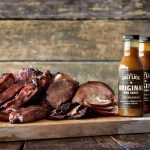
“If I do know what made [Big Bob Gibson’s] different, I wouldn’t tell you. There’s nothing. It’s just the fact that we like what we do, and we’re very particular about our people that work here, how they process the meat and cook the meat and, again, how they treat people, and I think that’s the secret to our success." – Don McLemore -----Big Bob Gibson’s Bar-B-Q A native of Decatur, Alabama, Bob Gibson was a big, good-humored man, who never met a stranger. In 1925 he was making a living working for the L & N Railroad, but on weekends he would toss hickory coals into a dugout pit in his backyard and host barbecues. His smoked pork, chicken, and vinegar-based white sauce became so popular that he eventually decided to open a restaurant. Big Bob Gibson sold barbecue from a handful of different locations in Decatur throughout the years, but in 1952 he put down some barbecue roots, opening a new place on 6th Avenue. There, Big Bob and his family solidified their reputation for quality barbecue, “Heaven High” meringue pies, and the now-ubiquitous white sauce. In 1972 Bob’s grandson, Don McLemore, joined the family business. Big Bob died a year later. In 1988 the restaurant burned to the ground. The family got itself and the restaurant back on its feet, though, saving the original neon sign and opening a new place right next door. Today, Don and his son-in-law, Chris Lilly, have made it their mission to not only carry the torch of good barbecue in Decatur, but carry it all over the country. Together, they take Big Bob Gibson’s brand of ‘cue on the competition circuit and national TV. But the Decatur restaurant is still home to what Big Bob Gibson started in his backyard more than eighty years ago. What follows is a portion of the original interview that has been edited for length. To download the entire transcript in PDF form, please click here. Subject: Don McLemore ----- Amy Evans: This is Amy Evans on Tuesday, November 15th, 2006 in Decatur, Alabama, at Big Bob Gibson’s Bar-B-Q, and I’m with Mr. Don McLemore. And sir, would you please state your name also your birth date for the record? Don McLemore: I’m Don McLemore; my birthday is December 9th, 1941. And you are a native of Decatur, Alabama, correct? I’ve lived in Decatur, Alabama, all my life. How far back does your family go here? I don’t know. I really don’t know the answer to that question. Well we know it goes back to Big Bob Gibson at least, your grandfather, right? We know it goes back to 1925 because that’s when my grandfather started cooking barbecue in his backyard. Can you tell me about your grandparents? I seem to recall that your grandfather worked for the railroad—but what they did here before they got into barbecue and what Decatur was like in 1925. Well now, like I said, I was born in ’41, and I don’t remember that far back, hardly. I do know that my grandfather started barbequing in 1925. Before he did that he worked for the L&N Railroad, I’m thinking maybe ten or twelve years, but I’m not sure about that, actually. He still was working for the railroad when he started barbecuing and kind of did that as a past-time in the backyard, but people seemed to like his food so well he decided he quit the railroad business—or maybe they quit him, I don’t really know—I think he quit them, and he started selling to the public. He went into business with his brother-in-law, who was Sam Woodall, and they went out on Moulton Road—do you want to hear all this? Okay. Went into the business together and actually called the first placed Gib-All’s for Gibson and Woodall. But now that partnership only lasted about maybe a year—not because of any animosity but Sam Woodall had a brother by the name of Jim. He came back from wherever he was working, and I don’t know where that was, and the brothers wanted to go into business together and so the brother-in-law went on his separate way, and [my grandfather] opened up what has become Big Bob Gibson Barbecue. He moved up the road from where they were cooking maybe three or four miles and opened a place. And from there he moved around Decatur three or four times maybe in different parts of Decatur. And we’re talking about little small places, you know, where you kind of go and you might stand up and place an order and might have a few chairs or stools or something; I don’t really know. But then in the early, early ‘40s he went out on what is Highway 67, which is close to Interstate 65 where Princeville is now located. He had two restaurants out there; I vaguely remember the location of one of them and one is close to where the Hardees [fast food chain restaurant] is now located, which is almost right next to I-65. He was out there at those two locations ten years, came back to Decatur, and opened the restaurant up right in our location now—not in the building we’re in but across the parking lot—in 1952. That is when my mom and dad went in business with my grandfather. My—my mom first. My dad was working right up the street at Alabama Hosiery Mill, which at that time was a really good place to work. But the barbecue business grew, and he decided he would just quit that job. And so after about two years that my mom was in the business with my grandfather, my dad came aboard too. And our family has been in the barbecue business ever since. I came to work with them in—I’ve got to think—1973 and have been here ever since. Now your mother is Bob Gibson’s daughter, is that the family lineage? Yes, my mother was the Gibson. My grandfather, Bob Gibson, had five children. He had three daughters and two sons. He actually had three sons. One got killed in a car wreck. And, in fact, he’s going to be on the cover of a menu in a new enterprise that we’re doing. We’re doing a franchise in [Charlotte,] North Carolina, and my deceased uncle is going to be on the cover. But anyway, all of the Gibson children were in the barbecue business—my mom with my grandfather—and I got to keep the Big Bob Gibson name. Her brothers and sisters went across town and opened just Bob Gibson, Jr. Bar-B-Q Restaurant, and my aunt and uncle went in business in Huntsville and opened Gibson’s Bar-B-Q. And they’re all selling—not all—the ones in town are no longer in business; the ones in Huntsville are still in business as Gibson’s Bar-B-Q and as David Gibson Bar-B-Q. No connection business wise, just a connection family-wise. They all had an interest in the barbecue business? They all had an interest in the barbecue business. They all did go in the barbecue business, and that’s how they made their living—all of them. What year was your mother born? I don’t know. Isn't that terrible? Well the reason I ask is because I’m wondering how old she was or if she had been born yet when Big Bob started having his picnics when—and/or when he established the restaurant in ’25. Yes, my mother was born when my grandfather started the business in ’25. She was young—and I should know these ages, but I don’t. I’m sorry…My dad was born in 1915. So I think my mom was probably born in around 1918. That should be very close, so she was like seven or maybe eight when my grandfather started cooking in his backyard and selling barbecue. Did she have some memories or ever share any memories of when she was young and your grandfather was having these picnics? She just remembered people coming to the house and buying food. She didn’t talk a lot about those early days; she talked about more when he was in business around town in those locations. Because, you know, a little time had passed from the time he started cooking until he opened the restaurants in town. So you know, if you’re seven or eight and you’re ten, eleven, or twelve, your memory is a little bit better. And they would go from place to place. And, of course, my grandmother—back then it was hard to travel. I think they may have had a car…or they may have shared the car with somebody else. I’m not sure. But I do know she talked about going to the locations that he had and spoke a little bit of what they were doing there. Well and Danville Road was out in the country back then, was it not? Yes, Danville Road was out in the country, and you are thinking of the right place. In fact, even when I was a teenager the house where my mother grew up was still on a dirt road. The pavement ended about two or three miles north of the house. It’s kind of ironic, one of our locations here in town—we have two—the restaurant here on 6th Avenue and the one on Danville Road—the location on Danville Road is only about maybe three or four miles from where my grandfather started cooking on the same—on Danville Road, the same road…That location opened in ’90—’91. Was that part of the reason to get that location was its proximity [to the original location] or was it just the luck of real estate? No, we just wanted to move across town, and it just happened that property was available and since the town was growing that way, and we thought that would be a good location, which it turned out to be. Well can we back up a little bit and talk about the picnics that your grandfather used to have and what those were like and what kind of person your grandfather was? Yeah, we can talk about those things. And now when you say picnics, the most vivid memory I have the picnics was I was older and actually out of college, but we did the big—big picnics like Monsanto [an agricultural biotechnology corporation], Chemstrand [a chemical fiber manufacturing company], and those kinds of things. There was, you know, 2,000 and 3,000 people, which back in that time we’re talking about the early ‘60s—were pretty large parties, pretty large picnics. Now the family picnics that you know, where he was serving food other than that, you know, I don’t have a lot of recollection of that. I wished I did, but I don’t. ----- So when your grandfather started cooking, [was it] just a family thing or a hobby that kind of, you know, took over his life that he just liked making barbecue and entertaining folks? I do think my grandfather liked to entertain folks. The one thing I do remember about him, he never, never met a stranger. He could talk to anybody, was always happy going, and very, very, very outgoing—but he also liked to eat, and I think those two things maybe got him in the barbecue business because he did liked to eat, and he liked to meet people, and liked to talk to people. And he was somewhat of a character, too. He and my grandmother actually divorced and back then you didn’t—as I understand, you didn’t hear a lot about those kinds of things. But the family stayed together, you know, pretty close. What year did he pass? My grandfather passed away, I think, in 1972 at the age of 86, I believe. Was he still involved in the business at that age? He actually lived right next door to the business—small little house—and he was married at the time. He would work just part-time, but he was kind of free to come and go as he pleased. He didn’t have to set hours; he just kind of did what he wanted to do, which is a nice way to do it. I’m getting that way myself, I think. Well do you have an idea of what he saw happen before his eyes of the popularity of barbecue in his restaurant? Now you know that’s one sad thing, I guess, if you think about the history of Bob Gibson; and he’s the one that got our business started and it grew from a dug-out pit in the backyard to what it is today. But [Sighs] he never saw, I don’t think, or even had an inkling of what it was going to become because even when he passed, well, we still had rather a small place. We could probably seat maybe 100 people, which you know is a fair-sized restaurant, but—and it was busy, but he still wasn’t known like we are today. He wasn’t featured on TV, radio, wasn’t written up in the magazines, and I’m sure he would be astounded if he was to come back and see what happened to the business that he started…And it’s kind of sad when you think about it that he didn’t live to see that. ----- And how do you feel about where Big Bob’s has gone in the past—the intervening years, since your father has passed and your grandfather and—and where Bob Gibson’s is still headed? I mean you’re still just going gangbusters, and you were talking about franchising in the future. How do I feel about how our business has grown?...Well, you know, naturally I’m proud of what we have done with the business. I’m proud of the fact that we’ve taken the business that my grandfather started in the backyard and are basically cooking the same way that he cooked. And we had made some modifications and some changes to what he did, but I’m proud that we’ve been able to—because of customers and—and friends and people and opportunities and being at the right place at the right time, we’ve kind of taken our business to a national level where we—in the barbecue world anyway, we’re pretty well known. Part of that is due too to my son-in-law, Chris Lilly. He’s a very dynamic young man and very well spoken young man. And he’s good with anybody he talks to. And one-on-one, he’s sort of a quiet person, but you get him with a group or in front of the camera or talking to a reporter or someone like that, he just becomes very energetic and very dynamic and very, very outgoing and just very well spoken, and he’s a good advocate of the barbecue business and of the barbecue world. ----- And now the white sauce because [your grandfather, Big Bob Gibson is] pretty much known as the person who invented the white sauce, as far as most people say. And I think y’all even—do y’all even say that, that he invented the white sauce? Yes. Yes, we do say that my grandfather invented the white sauce, and no one has come forward to dispute that so you know and honestly, to my knowledge, he is the person that started the white sauce. Now how he ever came up with the recipe, I don’t have any idea. I wish I did know that, but I don’t. Did he, at the same time, have the vinegar barbecue sauce? Yeah, he’s always had—again, to my knowledge—the vinegar sauce that we still have on the tables today and the white sauce, which is a vinegar-based sauce, too. So how, today, in what is Bob Gibson’s and the white sauce, which is now all over Alabama and to have started that trend, I guess, if you will, in barbecue and to be a part of where that started—? It makes me feel really good. And what really makes me feel good is when you go to some of the better-known restaurants in Alabama now, and you see that they have a bottle of white sauce. And some of them even call it the Original White Sauce, when I know it’s not because they never had it before until just the last couple of years. But that’s kind of neat to see that, and I think it’s sort of—it’s kind of funny really and it makes me proud, too, that we are the ones that started it. And the other folks who have come, they have jumped on that bandwagon and are using it too, so it’s kind of neat. I think it’s neat that a taste for it has developed along—its popularity is that people have come here for so long so often that they have developed a taste for the white sauce that has demanded that it be recreated. Yeah. And another thing that’s wonderful about that, since we are—market our sauce, our white sauce as well as our tomato sauce, I want everyone in the whole world to start liking white sauce. We’ll just sell that much more of it. But that’s kind of nice, too. But and what you said, too, is true that folks have kind of developed a taste for it. It’s kind of like taking a bucket of water and pouring it out and it just slowly spreads out, and that’s kind of the way our white sauce has done. We started selling it, like you indicated, and it slowly spread to other towns around, and now we’re in about five or six states—not in every store, of course, but you know, different stores and different parts of the states but in about five or six states, selling not just our white sauce but our other sauces, too. And, of course, we sell a lot of sauce mail order, too—all over the country. And the white sauce was intended originally to be on the chickens only. And I know you baptized the chickens today, as you say, in the white sauce, but a lot of people use it on their barbecue also. Yes, we have customers that come in here, and they’re locals, as well as people that just come over and try it. They will try it on pork, or some even try it on ribs. Now personally, I don’t care for it on pork. I love it on chicken, and it’s real, real good on turkey. But other than that—and it’s good on potato chips; it’s very good on potato chips. A lot of kids do that. I’m not a kid, but I still do it once in a while myself. But that’s the things it’s really good for. We do have customers, though, that just—they’ll use the white sauce on pork and nothing else. Well can we talk about the nuts and bolts of making barbecue and how Bob Gibson worked on an underground pit in the early days and how that evolved to a brick pit and what you use now? Well now again, you’re asking me some hard questions. I do know that he started cooking and had a pit in the ground. When he went from that to just doing a concrete block pit, I don’t know. I would think because of the work involved in a dug pit, he probably changed pretty quick. I would have, if I had been him. But you know, it’s hard to beat just an old-fashioned concrete block pit. I mean you still see people cooking that way today in certain parts of the country and it’s—you got your meat on the pit, you got your fire off to the side; so when you fill up the coals up under it, the hot coals and all the drippings fall down and the grease will get over it and a good smell and appetizing, and it’s almost like it marinades the meat a little bit. But yeah, that’s a wonderful way to cook. In the real world, though, where you have a big commercial business, it’s really hard to continue to cook that way. We come as close as we can to cooking that way. We still have the old-fashioned brick pits—not concrete blocks but brick and firebrick. We have a flat grate, and we have a big fire up in the front of the pit, and we cook with indirect heat and smoke. We don’t throw the coals under the meat anymore because of the fire hazards and because of the fire department, but it’s as close as we can come to cooking just like my grandfather used to cook. ----- Now I’m not sure I understand your question. Well that Chris and Amy [Lilly], being the fourth generation involved in the restaurant and how—because a lot of people that I speak with in the restaurant business that’s family-owned their kids may or may not be—more often are not—are not interested in the family business, so it seems to be a generational thing, where it might see an end. But in your family, the family interest has been maintained. Okay. That’s a very good question because actually, we’re talking about now Chris and Amy, being the fourth generation. Going from my grandfather, I think he really loved the barbecue business, the barbecue world—meeting the folks and doing what he did. My mom was very outgoing, too. She worked the front of the house, so to speak. She did the business part of the restaurant. My dad was the pit master, so to speak. He worked always back in the back. He wasn’t quite as good with the public as my mom was and I don’t think—he liked what he did, but I don’t even think my dad liked the barbecue business like I do. I love it; I love what I do. In fact, I’m probably more like my grandfather than any of the other cousins that I have—even more so than my uncles, maybe. And they all went in the barbecue business too, but nobody loves it like I do. At least I don’t think they do. And Chris—of course I’m third generation, Chris being fourth—I’m not sure Chris will love it as much as I do because I will go around and travel all over the country and eat barbecue, and Chris won't do that, you know. And, I guess, to do that you’ve really got to love barbecue. He loves what he does, but I think when you really get down to the nitty-gritty, I probably like it even better than Chris does. But he likes it well enough to keep the business going, so I think that is a plus. And you mentioned it is hard for a business to grow and especially to prosper and keep going, you know, and you can't stand still. ----- Can you articulate what that is about barbecue that you love so much? You mean what do I love about the barbecue business or just about barbecue in general? Both. I love the business because you know, you kind of are free to do what you want to do. You’re—and kind of like my grandfather, you’re free to meet people, talk to people, which is a nice thing. You know, you have politicians come in here. Our place has become a gathering place. If something new happens in town, you know a lot of folks will meet here and talk about it, so you kind of keep up with what’s going on in the city and the state and the world. And it’s just a good feeling to be around folks like that. And as far as loving barbecue, you know, you can tell I love to eat, but I really, really love barbecue. And I’ll go out of my way with my wife when we’re traveling to try different barbecue places. And a lot of times we’ll actually just make a barbecue trip and we may try—and I’m not exaggerating when I say this—twenty or twenty-five places in six or seven days. We’ve been known to stop at five or six in one day. My poor wife, Carolyn, will wind up drinking coffee, while I’m still trying barbecue. But I just love it. And if you’ll look behind you, I’ve got a big collection of sauce. I like to try different barbecue sauces and usually, if I find one that looks good and I think is good, I’ll buy two bottles: one to try and then one to keep and put on my “Save Rack,” I call it. But I just like what I do. ----- Well so then with all this experience with the different kinds of barbecue and throughout the region and the country, what do you think is different about Bob Gibson’s that makes it stand out, especially, in your mind, being the proprietor here? One thing—it goes back to I love what I do; I’m proud of what we do. I’ve tried to build a high standard of how our food is and how our service is. Not that other folks don’t do those same things, but maybe we try just a little harder to excel in what we do and to be sure that our food is consistent every day, as best we can. And I’m not saying that sometimes it doesn’t vary a little, but by and large, if you eat here today or if you eat her next week or next month, our food is going to taste about the same, and you’re going to be treated about the same when you come here. And that’s what we strive for, and I think that’s why we’ve been successful. And we don’t rest on the laurels of what we’ve done. You know, we do competition cooking. We’ve been very fortunate and very blessed in things we’ve won and things we’ve done. And we’ve been very fortunate in some of the things that Chris has done as far as the TV shows he’s been on and the people he’s spoken with. But you can't let that just be a standard and take that for granted and then stop at that. You’ve got to keep trying to improve it. It goes back to what I said while ago: you can't stand still. You’re either sleeping or moving forward, and so we continually try to move forward. And I truly think that is what has made us grow like we have because we do keep trying to improve and move forward. And I said we don’t change earlier; we don’t change what we do or how we cook. And in so many ways now, we do change a little bit, and I should expand on that a little bit. In competition cooking, some of the things that we’ve cooked and the way we’ve cooked them—and I’m speaking of things we put on the meat that we cook—like we’ve come up with a different rub that enhances the flavor of the meat a little bit more. We don’t necessarily change the way we cook the meat, but we change a little bit what we might put on it, like a rub. So—but doing the competition cookings that we’ve done, I think we have improved our flavor a little bit because we found what tastes good to judges, and judges are just like normal people. But you know their tastes are probably like your tastes or somebody else’s tastes, so if we can please them with something we’ve come up with, we can please the general public too. So we have, I think, slowly improved our rubs. We’ve improved our pork because of the rub that we put on it. My grand—I’ll give you an example—my grandfather—we did, too, for years and years—all we put on our shoulder was—and this may be a bad word today, but people are going back to salt—we put salt on our shoulders. That’s all we did and they were wonderful. The sauce—the red pepper sauce that we’ve got, we mop them with that. But since we’ve started competition cooking, we’ve come up with what we call a shoulder rub, and so we rub that shoulder down, and we did good with that and don’t use the salt. Of course it’s got a little salt in it, of course, but the flavor is better because of that. So what I’m getting at, because of the things we’ve done and the things we’ve learned and the things we’ve done, it—we’ve used those and applied those techniques to make our food a little bit better here—shoulder, rib, and so on. So then competition cooking has really influenced what you do here locally in Decatur in this restaurant? Yes, it has. One thing that we’ve added because of competition cooking—we’ve always cooked beef, like a beef round, because my grandfather started doing that early on. But we’ve started serving beef brisket here like they serve in Texas, and we did that because of competition cooking. We’ve got where we can cook that really well and won some contests with that, so Chris said, “Why don’t we just start serving it at the restaurant?” So we have and people just seem to love it. Huh. I wonder what your local customers here—I mean I know by now they’re used to you winning all these awards and everything, but I wonder what, locally, if it’s—it’s obviously well received when you come back with different things like the beef and all those things, but I’m really fascinated by competition cooking influencing what you do locally and what the locals—how that’s received locally. But it’s not just a matter of getting your name out there; it’s a matter of kind of market-testing different things that you can implement here in your business. I guess that’s a pretty good way to put it, yeah. Because when we competition cook, we are testing new things. If we arrive at something that’s proven that we win with, we don’t necessarily change that. But ribs is a good example. Chris is constantly changing our ribs, just tweaking them, so to speak, just to make them a little bit better. And so if we find a winning technique with our ribs, we’ll come back and tweak our rub here just a little bit to make our ribs better, and I think that’s kind of what you’re asking me—what we do here. But I wonder if kind of deep down if there might be somewhat of a dilemma is the word that comes to mind, and I don’t want to start any trouble but if you’re on the circuit and the competitions are pretty localized, like Memphis in May, for example. While it’s renowned, Memphis has its own barbecue style, but if a different region, if a different style within the region is influencing your competition cooking, and then you’re bringing that back to northern Alabama, does that not dilute Northern Alabama’s style of barbecue? Now I’m glad you ask it that way. What we at Gibson’s do, we take north Alabama to Memphis in May and have done very well. So what do you think people take away from those experiences that you have when you take northern Alabama barbecue to them? Well we have people come in from—and maybe they don’t always travel directly here to try food, but they’ve heard about us and they’ve seen us on TV, and they’ve read about us. They’ll go out of their way just to try food. I had a guy in here today from all places, Canada. I was talking to the gentleman, and he came in and said, “Would you mind signing this menu for me? I’ve seen y’all on TV, I’ve read about you.” And naturally, I did, and he started talking about Memphis in May and the things we had won. So that was kind of nice. ----- So what is that going to be like when Bob Gibson’s grows yet again, and you get into franchising? Well we’re hoping it’s going to stay the same way, and we’re trying to be very, very selective about who we sell franchises to. We’re not really out pushing franchises right now; we’ve only sold one. We’ve had numerous calls about them but—and we return the calls, of course, but we’re really not trying to sell another one right now. The first franchise that was in Charlotte, North Carolina, January 8th [2007], and we want to get that one up and running—running well before we would try to sell another one. ----- Well let’s talk about the pies. When did they become part of what Big Bob Gibson’s is known for? I do know that my grandfather did not start selling pies when he first started cooking. I don’t really think we started serving pies until maybe the early ‘50s, when he came here on 6th Avenue. The pies were my grandmother’s recipes and, I think, an aunt’s recipe. And again, all we serve is the coconut cream, the chocolate—these are meringue pies—we call them Heaven High Meringue Pies—and then a lemon icebox. ----- Well what is it, from your perspective, about the pies that is so special—besides the people who have made them for so long—and how it’s been such an integral part of the business? Well I think the people mainly but the fact, again, that it’s a good recipe, first of all, and then making them the same way every day—every day. ----- Is there one of the three that sells more than the other? On a regular basis the coconut probably outsells the other two. During holidays, the chocolate outsells the other two. It’s kind of strange. ----- Well I’ve taken up a lot of your time here, and I’m sure we could talk for hours on end, but I wonder if there’s something about the barbecue, specifically, and your process and what makes it different that you’d like to add or contribute that I haven’t asked that is important about what you do here. No. If I do know what made it different, other than what I’ve already told you about—the tender loving care that we give it—I wouldn’t tell you. There’s nothing. It’s just the fact that we like what we do, and we’re very particular about our people that work here, how they process the meat and cook the meat and, again, how they treat people, and I think that’s the secret to our success. ----- To download the entire transcript in PDF form, please click here.
Introduction | Interactive Map | Oral Histories | About & Contact | More Trails... |
|
||||
| |
|
|
|
|||