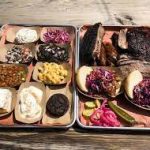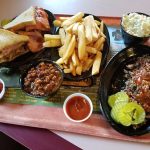

bbq top menu 1

Interactive Map | Oral Histories | Contact | More Trails...         

TN bbq OH MENU

Tennessee BBQ
Introduction

Interactive Map

TENNESSEE
INTERVIEWS

A&R Bar-B-Que

Bar-B-Q Shop

Bill Latham's Bar-B-Q

Central BBQ

Cozy Corner Restaurant

Curt's Smoke House

Germantown Commissary

Gridley's BBQ

Hays Meat Company

Helen's Bar-B-Q

Interstate Bar-B-Que

Jack's Creek Bar-B-Q

Leonard's Pit Barbecue

Liz's Bar-B-Q

Papa KayJoe's Bar-B-Q

Payne's Bar-B-Q

Rendezvous

Richard's Bar-B-Que

Ridgewood Barbecue

Scott's-Parker's Barbecue

Siler's Old Time BBQ

Three Little Pigs Bar-B-Q

Tom's Bar-B-Q and Deli

Tommy Leonard's Bar-B-Q

Woodstock Store N' Deli

"We use hams, not shoulders. I’ve often said that even a country boy knows that shoulders go into sausage…When you start out with a good product, you more nearly will end up with a good product.” – Larry Proffitt

-----

Ridgewood Barbecue
900 Elizabethton Hwy
Bluff City, TN 37618
(423) 538-7543

In 1948 Jim Proffitt and some partners opened a little country roadhouse in Bluff City, Tennessee, where they sold steaks, chops, and beer. They called their place the Ridgewood Inn. But in 1952 Sullivan County went dry, and Jim’s partners wanted out. Jim took the place over and reevaluated his business plan. Remembering a restaurant he saw on a family vacation to Daytona Beach, Florida, he decided he would have a go at barbecue. He built his first pit out of cinder blocks, got his hands on some fresh hams and rechristened his restaurant Ridgewood Barbecue. From there, the evolution of Ridgewood Barbecue was a family affair. Jim’s wife, Grace Proffitt, not only operated the business while Jim worked his other job at a rayon plant in nearby Elizabethton, she developed some recipes, as well. Their sons, Terry and Larry, worked at Ridgewood while they were growing up. But part of the inspiration behind Ridgewood was for Jim and Grace Proffitt to be able to provide good educations for their sons. Terry got a business degree and Larry went to pharmacy school. But when Jim died in 1980, Terry filled his father’s shoes at the restaurant. And when both Terry and Grace passed, Larry spilt his time between filling prescriptions at Burgie Drugs and smoking hams at Ridgewood. Today, Larry’s daughter Lisa holds the reins of this family institution.


What follows is a portion of the original interview that has been edited for length. To download the entire transcript in PDF form, please click here.

Subject: Larry Proffitt
Date: February 3, 2009
Location: Ridgewood Barbecue – Bluff City, TN
Interviewer & Photographer: Amy C. Evans

-----

Amy Evans:  This is Amy Evans on Monday, February 23, 2009, for the Southern Foodways Alliance, and I am in Bluff City, Tennessee, at Ridgewood Barbecue sitting with Mr. Larry Proffitt. And Mr. Proffitt, if you would state your name and also both of your occupations for the record, please, sir?

Larry Proffitt:  I’m Larry Proffitt; I was born November 27, 1943. I’m a pharmacist by profession. I’m the last man standing in my family that owns Ridgewood Barbecue. I’ve known it more intimately than any other business. I remember when I was approximately four to five years old, I came here to see this place with my father [Jim Proffitt] when it was strings [to show foundation outlines] around it. It’s a vivid memory. You know, you don’t remember many things, but I remember that.

Could you speak about your parents? I understand that the idea for the Ridgewood came from a family trip to Florida?

We didn’t really have barbecue until I was in high school in the [nineteen] ’50s. We really didn’t have barbecue as such. Everyone in this area around here had some little barbecue, and we’d see it in the papers, but most of that stuff was cooked in an oven someplace. Or the way that we do it today was derived when we were in—my father would take us on vacation. We went to Daytona Beach most of the time in Florida, so we went out one night, and we saw someone who—they were cooking chickens, and they would pipe the smoke as they still do some places in South Georgia. I’ve seen it. They would build the fire in one place, and the smoke would migrate over to the place where they had the chickens, and the chickens would cook. And so we came back home, and he built his first barbecue pit. He made it out of cinderblocks. So shortly thereafter it was like the Three Little Pigs. It got full of grease and up it went in smoke.

So the second time he built it in the same place, and he built it out of bricks. That lasted somewhat longer, but it, too, went up in smoke one day when all that grease caught in fire. So his final design, and the design I use today is—we use firebricks on the inside, just like what’s on the inside of your fireplace. And so it has—the whole thing is lined with firebricks, and it has walls about fourteen inches thick of concrete on the outside of that, and all that’s coated with stainless steel. It has a stainless steel top and stainless steel doors, so that’s our design today. We smoke the meat from—of course it depends on how much you’re smoking that particular day, but we smoke it anywhere from six to nine hours, depending on how much that we have in there, until it gets completely done. We use hams, not shoulders. I’ve often said that even a country boy knows that shoulders go into sausage. We take the best cuts and we try to buy the best product that we can. When you start out with a good product, you more nearly will end up with a good product…When the hams come out, any fat that is on there goes in the trash. We cut it all off. You look at our meat, and it will be fat-free. Many places also, they don’t cook it long enough for it to be completely done. When you get it—I like to use the word mushy; you won't find ours to be that way. I like meat that’s cooked until it’s done. When it comes out of that pit, it’s done. In essence, what we’re doing is just getting it red hot on a very hot grill and putting our sauce on it, which is a secret recipe that was my—most all barbecue recipes I’ve found are secret, and so my father had us to memorize it, the four of us, and I’m just the last man standing. My young daughter [Lisa Peters]—one daughter is a—she’s an RN [Registered Nurse], but she didn’t like that, so she’s now running the day-by-day business. And so after my brother [Terry Proffitt] died, we didn’t even tell our wives [the recipe]. So I told [my daughter Lisa] [the recipe] one Sunday as we made forty gallons of sauce, I said, “Now you remember it?” She said, “Yes.” I said, “You have it down?” “Oh, yes.” And so I made another forty gallons of sauce that afternoon, and I went out front and got me a little pack of matches, and I burned it right before her eyes what she had written down—what I had written down for her and then what she had written down several times. And she really didn’t think that I knew the recipe, and she had a pint of sauce hidden in her pocketbook that my brother had made, and she tasted it and she said, “They do taste the same, don’t they?” And I said, “Of course.” I said—but I said, “You—you keep it in your brain and at some point—.” [She] said, “You mean that’s the only place it is?” I said, “The only place it needs to be right now until one of us is dead.” And probably—most likely, I’ll be the first one. I’m sixty-five years old today, and that’s her business then.

-----

Do you remember the day that your father shared the recipe with you and your brother?

No, I really don’t. It’s been, you know—it’s been years and years; that would have been like when I was in high school. I remember his saying when he was developing that sauce, he said, “Here, taste this.” I was a little boy and when it—when we lived—we’re way out in the country, and when it was a bad day and someone couldn’t come to work or someone—I was the dishwasher on Saturday and Sunday. So he said, “Here, taste this; taste this now.” This changed. “No, I don’t want it.” He said, “Boy, you might have to make a living like this one day.” So he taught us to work, and that was one of the most beneficial things that he ever taught us was to work.

Did you have an idea when he shared the recipe with you how important that was at that moment?

Had no idea in the world. Just that that was something else that he made us do, and they wouldn’t write the recipe down when they were making it. My mother made it for years, and we had it; and then, as she grew older—my father died in 1980, and she grew older and later was in a nursing home. She lived to be eighty-six years old [Grace Proffitt died in 2002], but even when she was in the nursing home, she had some light strokes and she didn’t remember, and my brother and I did. So you know, as we age, we see the great importance of things that we have learned when we were younger and the things—that’s why I say this is my first love. I make a living as a pharmacist for all my life and owned a drugstore, but my first love is what I learned from a child. I have a feeling for what’s right and what’s not. I eat my product regularly so that it stays the same. When my brother died, I gathered the cooks in here, and I said, “Now we’re going to make it just like this. I don’t care if I don’t sell ten a week. I don’t have to make any money.” I said, “I want—it’s going to be just like this.” And you’ll find from eight to nine ounces of cooked meat on each sandwich.

Now if we were in the high-rent district, and we owed anything—we don’t owe anything, so we can afford to, still even in hard economic times, to put—give people—I did an interview the other day, and I said, on the radio, I said, “We give even today more than your money’s worth, and that’s what we’re still doing.” People come back from thirty and forty years who have been here, and they say it’s still the same.

Ridgewood opened in 1948, correct?

That is correct. It opened in 1948 [as the Ridgewood Inn], but we didn’t have barbecue. We just had steaks and chops. It was just a little roadhouse out in the country. I tell people it was just a beer joint is about all it amounted to. There’s one up and down the road everywhere. So the county went dry in 1952, and we had to make a living. We had to make a living selling food, really. So those were lean times until barbecue came along and still, it’s in a rural area…My father and mother’s desire was to give my brother and I an education, and so they did and we did. So, but still my first love is what you learned. But and my daughter loves it. I mean nobody loves hard work but, like I told her, I said, “You’ll never get rich, and we don’t like rich people anyhow. We was raised poor.” I said, “We’re just working folks.” And I said, “You’ll make an honorable living and don’t change anything.” So that’s the way we’re progressing in the year 2009.

May I ask you how your father came to name the restaurant Ridgewood?

There was a place called—I’m thinking this; he never did tell me this thing, but the place that we saw that he kept pointing out to us and telling us was the Big Ridgewood Hotel in Daytona Beach [Florida]. He loved to go to Daytona and I think that perhaps that’s where it came from. That’s the only place it could have come from was from that Ridgewood Hotel. I have no other ideas, you know, or any other recollections of that.

-----

May I ask you where you’re getting your hams and how many you might go through in a week?

Well, you know, this is February, so you’re not going to do near the business in February. It’s very seasonal, this business is. When things start getting warm—we’re way out in the country and we have people come—third and fourth generations. People travel. They’ll come by here. We buy our hams locally now. We’ve bought them from Armor. We’ve bought them from Lay Packing Company in Knoxville. They went belly up. Now we’re getting them from a local place where these hams are bone—with the bone out and a net wrapping around them…We slice the ham, rather than pull them or shred them. We slice it and we try to—once upon a time we thought we were going to try to portion it. Well, that didn’t work, so there’s just a finite amount of meat that you can get on one of those large barbecue buns without it falling over. And so we just let the cooks put on there what they think looks good and it’s always heavy with meat, and then we charge accordingly…Like our potatoes; we use number one Idaho bakers, the big kind that you see you can buy individually in the grocery store. My mother, one time they were like over a dollar and something a pound, and I told my mother, I said, “We’ll use local potatoes. They’re cheaper.” “No, we won't,” [she said]. I said, “Why?” She said, “They don’t cook up right.” So even at that time, I mean she—you give something to people good and some other places would open—and another one of her sayings, “They will all try it once.” If the food is not good, they won't come back. They might try it a time or two but the—the ambiance only goes so far when your belly is growling. And so they—that’s what we keep striving for is the product, the product, the product. Make sure that the product is right and sufficient for a person, and they’ll keep coming back to get it. So I tell people, I say, “You see those fries? Yesterday they were round.” And so we cut them up each day. And we make our slaw from a head of cabbage. It never comes in a bag. We make our blue cheese dressing from a big hoop of blue cheese.

----

And how many hams can you fit on your pit at one time?

Well I built a second pit. I’ve got a second building, and I’ve got four pits now, and I can probably get twenty-five hams in each. I can probably in the summertime, you know, I could cook 100 hams a day in one round. But about eight years ago the ceiling of one of the enclosures it caught a-fire. They got too much fire trying to get it started, and one of them wisely ran up here and got the fire extinguisher. Now I have two or three stuck around down there and put it out. But it just occurred to me, my goodness, if that thing burned down, I would be out of business for about six months. So I had me a whole new one built beside that one and then I let them start using that one, and then I rebuilt a whole other new one right beside it, so we can cook 100 hams easily in one morning—I mean one day.

-----

What are some of the other things you have on the menu in addition to the barbecue sandwiches? I know you have some beans and I hear tell that that recipe might come from Memphis. Is that true?

That idea came from Memphis. I was in the University of Tennessee in Memphis in Pharmacy in the College of Pharmacy and so there’s great barbecue places in Memphis. Still are. And this was called Leonard’s Barbecue, and this was in the late [nineteen] ‘60s down on McLemore [Street]. So we went down there, and they had beans on the menu, and I said, “Mama, I bet you could make beans better than this.” So I knew she used to make baked beans all the time…But when I came home, she had real good barbecued beans. And what she was doing, when you sliced those hams, some of it falls off; you get to the end, there’s the little piece that you can't do anything with. I mean it won't slice, so they’d chop it up and put it in the beans—no fat, just the meat, just real lean meat in there with her stuff, plus they’d put that barbecue sauce in it. And people loved those beans; they’d eat a lot of them.

So now since you have the barbecue restaurant here that was inspired by a trip to Florida and beans that were inspired by your time in Memphis, is there anything that you would consider traditional Appalachian kind of influence in what you serve here?

No, not really. You know, when you go to a steak restaurant, you don’t get chicken tenders. But we’ve got chicken tenders, and we’ve got good chicken tenders because, you know, there’s chicken tenders, and then there’s the kind that doesn’t look like rubber; it looks like it’s a chicken. So we buy that kind and we used to have—we had hot dogs on the menu, and I said, “Mama, why do we’ve got hot dogs?” “Well,” she said, “children eat hotdogs.” So you know we’ve got good hamburger steaks…And so that’s good stuff.

-----

Tell me about your commitment to using all hickory wood.

We have a lot of hickory around this place. And you know in Texas they use a lot of mesquite, which would be good. Perhaps other types of wood would be good, but this is what my father started using. I don’t know why; I don’t know where he come up with the idea of using hickory, but you see a lot of places say “Hickory-smoked wood,” but today most—so much of your barbecue is not cooked outside in a pit. It’s cooked in—some—you know, who knows where it’s cooked; it may be cooked in an oven someplace. It appears so…This intense taste that’s on the outside of these hams, as the ham is sliced and the blade goes through the ham, some of that outside taste is imparted—sliced—goes through that—every time it slices it goes through and imparts a little bit of that taste into that meat.

-----

I was reminded to mention that I read somewhere that you have a family farm that’s been in your family for a long time where you source some of your hickory. Is that right?

That’s right, it’s been in my family—I’ve got the deeds to it from 1856. It came through the ladies, and one of the Proffitts married the lady that her family had owned it, and my grandmother [Mary Bertha Proffitt] was born out there in 1882. But it came through the ladies, and we got a lot of hickory out there. And we’ve been fortunate to have some really good suppliers of hickory wood. There’s a lot still grow(ed) here, and I have one good friend who has a contract to clear right-of-ways for TVA [Tennessee Valley Authority], and they have to move that wood out. Sometimes he’ll cut big hickories and I’ll get some for those, but I’ve got a big building up here that I’ve got it stored in the dry, so that I’ll never let it get down. And then I’ve got two sawmill friends, and they have the outside that comes off you know in blocks, and so I buy those and keep a stockpile of good hickory wood dry.

So it seems like you’re in a fairly unique position where you—I can't imagine you foresee any time when you’ll find hickory scarce for your business?

Well, no, not in this area. It’s just like out in Texas; you’d never be out of mesquite. But around here, these are mixed hardwoods around here and there’s lots of hickory. There’s lots of oak—white oak and red oak—and we use hickory. But I try to identify those sources and I think about those things all the time to keep a good stockpile, but if worse comes to worse, I’ve got a whole lot of them out there as big around as a front end of a car.

-----

Tell me about Lewis Malone, your pit master who has been here for some years?

Lewis died about two months ago. Now he had been retired now for about six or eight years, and his nephew, Leon Malone, had helped him for many years. And now Leon is working. He’s about, oh, I think Leon might be forty-two years of age. And he’s been with him, and we have another young man that’s helping him, so—and Lewis Malone was the man, the second generation. There was another man named Gleeson Malone who was Lewis Malone’s uncle, so they’ve been—in essence, it’s a third generation right now of the Malones, who are—that’s cooking—this man that’s cooking. And then we have another man that’s helping them. He’s learned the art. The art in the cooking the way we do is to get the wood very hot and get an immense fire in the morning early. And then you put the meat in there and you shut the air off, and the art in it is letting just enough air through to let the wood smolder and retain the heat and the smoke; but if you let too much air in there, you’ll burn your meat, so you want just enough to get it very hot and keep it very hot, and you keep adding wood all during the day. And then when they’d get done, we’ll take one out and cut it open and see if it’s done. No meat unless it’s done. A lot of people hold their meat and they want it to just be barely done so that they—they do a lot of shrinkage, you see, if you cook it undone. And we’ll lose fifty-percent by cooking it that way, whereas you might be able to get by with the third, but then you end up with that—what I call a mushy product. But you won't find a mushy product at Ridgewood; you’re going to find meat that’s done.

Now what is it about this place and this business, do you think, that has kept three generations of one family here working for you?

We treat them like we’d want to be treated, and we pay them accordingly. We’ve got the second and third generations out here of ladies that are waitresses and people that cook, some of them the third generation; and it’s as a family, and we treat them as if they were our family. And we pay them accordingly. When you pay people and treat them right, they’ll stay. They’ll honor you by staying with you.

Can you describe what this place was like when your father first opened it, the building and also the clientele?

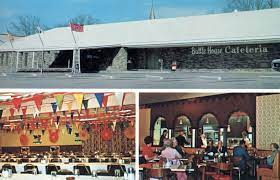
The building looked more or less like it does today. It was just a large stucco building way out in the country and time passed us by. This used to be the main road between Elizabethton and Bristol, just a little narrow concrete road back then. And the clientele was just local clientele, and it was not until barbecue came on my mother—my father was the genesis of the ideas for these things, whereas my mother stayed with it. She would stay and work it, and she would have to go out and pick up her help and take them back home at night. There wasn’t many people that had cars around here and, at that time, in the early [nineteen] ‘50s.

-----

And so your father, Jim, conceived this place, but the more you’re talking, you’re talking about your mother, Grace, who did a lot of the cooking and the recipes. Was she also kind of the personality of the place early on?

She was the personality and then, as she got older, people would come and just swarm on the weekend. They didn’t understand that she’s just an old woman out here in the country…My mother, in essence, she ran the restaurant by herself. My father worked at a little rayon plant in Elizabethton, and it was so long—she said, “Many months I would go and not make a penny. I’d just make enough to pay my employees.” And why she stayed with it, I have no idea. People would ask her that, and she said, “I had two little boys to educate,” so you know that’s why she kept staying with it. And I think that probably the product started catching on, and then local people would come. And she just stayed the generations; she just stayed with it so long and kept the same product and, you know, you go to a place and you get used to seeing John Doe there all the time. And she was always here; she worked seven days a week. And then later on, six days, but she was always here and the people were always here, and then they had the same product, so she enjoyed it. She enjoyed the people…I think, really, my mother, her drive and her stay with it was to see my brother and I educated.

What made you want to go to Pharmacy School?

We had a local pharmacist in Bluff City who I really liked. And, originally, I was going into medicine, and my best friend is a cardiologist in Johnson City, and we went to UT  [University of Tennessee] together, but then I decided to get married. And I could get out of pharmacy in four years, rather than getting out in about seven or eight years, so I went into pharmacy and it’s been good for me because, at my age now, I can hire someone to do the work, whereas if I were a physician, I would still have to be in the trenches. But I just got in it as a way to make a living.

Do you think there are any similarities between the barbecue business and pharmacy?

Very much so because, as my—I often quote my mother, and she had many, many things that she would say, such as, I said a while ago, “They’ll all try it once.” But what she’d do is she would say, “Anyone who has to deal with the public—.” And you’re dealing with the public when you’re in any kind of retail business and imprint it on her because of the way she would tolerate people. And she often said about trying to help, she says, “I always tried to help those who try to help themselves. The poor will always be with us, but there’s the people who try to help themselves.” The poor, she would try to help them. But the similarity, I think, in the two professions is dealing with people and seeing the myriad of makeup of people. And of course in pharmacy you see a lot of people who are sick. People who are sick, they need help.

-----

Were you afraid at all if [your daughters] got out and got an education that they may not want to come back and be a part of the barbecue business?

I had no idea in the world that Lisa would even want to. You know, we assumed that Terry would live as long as I did. But he, you know, in the Lord’s providence he—his days were done at age fifty-five, and Lisa really didn’t like nursing. She was a charge nurse on a floor at night in St. Petersburg, and she just really didn’t like it because the pay is not commensurate with the responsibility…And so I had no idea that they would be here and be back here working. It just evolved.

May I ask you what came first, your brother Terry’s passing or Lisa’s interest in the restaurant?

My brother started having some blacking out spells, and Lisa had talked about the Ridgewood, you know, perhaps she would come back, so she came back and worked with my brother [in 1997] five years before he died [in 2002]. And I started her out. Oh, she would whine to her mother because I started her out…I told my Lisa, I said, “You wash dishes, you bus tables, you learn how to cook the sandwiches, you learn how to do this; you learn how to do all this stuff, so you can teach each person how to do their particular job perfectly.” And she whined a lot to her mother, but you know it’s business and it’s tough to make a living in it, but you only what you can engender and put into your child’s head is what’s important. You teach them to work, and that’s what I taught mine.

-----

Where do you think you fit into the tradition of barbecue in the Southeast United States?

Really, after having seen the—the National Public Radio—TV did a—did a series on barbecue and this last year in Tennessee. They started from—Tennessee is 500 miles long, and it was interesting to see all these barbecue places. A lot of them is just—there’s all kinds of barbecue, but I would say that we’re just a—we just sell a lot of barbecue. I don’t really know how it would fit in in the scheme of things, but people say, “Why don’t you change or move out or expand or create something else,” but I don’t think so. I think we’ll just continue to sell food.

-----

Do you have an idea of what percentage today you might have of local business and tourist business?

I tell people, I say, “We know who keeps our bills paid when it’s cold in the winter. It’s local people.” And if local people trade with you, you come and you see people that’s—that’s local, you know it’s a good place. And so all the winter months and stuff—but now in the summertime you see a lot of Yankee cars, and you see a lot of Florida cars. And the people coming—we’re thankful; we’re thankful to see them and—. One thing that is of interest that I think is when the Civil Rights thing was going on and my mother, the—the black people always ate here and she welcomed them. And I thought that was interesting.

So Ridgewood was never segregated at any time then?

No, ma’am, not at all.

Well what do you think the future of Ridgewood Barbecue is?

Well only the Lord knows that, but I suspect my daughter will continue. She’s thirty-nine years old; she’ll be forty the twenty-seventh of September and she loves it. And perhaps one of her twins—they’re both seven, Amanda and Jacob—perhaps one of them will want to but it’s a good place. A person can make a good living.

What do you think your parents would have to say about your daughter taking over the business today?

My mother, especially, would be tickled to death that her legacy continues because she thought so much of the business, and she put her lifetime of work into it. Even after she didn’t have to work, I had people say, “Aren't you going to retire. I’m sixty-five.” I said, “And shame my mama?” I said, “She went down when she was seventy-nine.”

-----

To download the entire transcript in PDF form, please click here.


bottom MENU

Introduction | Interactive Map | Oral Histories | About & Contact | More Trails...