
![]() |
![]() |
![]() |
||||
Browse Oral Histories by State | Interactive Map | More Trails |
|
|||||
| |
||||||
|
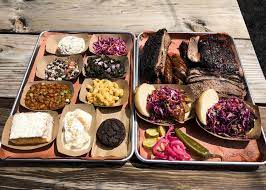
“I’m pretty much going by the old regular standard way of doing certain things, and I think a whole lot of other people is taking a whole lot of shortcuts. … And you really can't change a whole lot from cooking the old way; you pretty much have to, you know, season your meat. … I found out you just pretty much keep things the same way, you do the same thing, and you don't have any problem.” – Frank Vernon The Bar-B-Q Shop The Bar-B-Q Shop is a classic Memphis smokehouse. The centrally located restaurant, run by the Vernon family, dishes out the standards, while still offering enough unique twists to keep a visit (or habit) interesting. Sandwiches may be ordered on grilled Texas toast. Half-and-half ribs—a split portion of dry and wet—are here for the indecisive or the taste testers. Mr. Frank Vernon purchased the old Memphis standard Brady & Lil’s back in 1983. That former restaurant, operating since the 1950s, was the supposed originator of the wholly local dish barbecued spaghetti, noodles simmered in sauce and pork trimmings. The elder Vernon is in the slow process of handing the business over to his son Eric, who is undoubtedly one of the only professional restaurant barbecuers with a MBA.
What follows is a portion of the original interview that has been edited for length. To download the entire transcript in PDF form, please click here. Subject: Frank & Eric Vernon ——- Rien T. Fertel: This is Rien Fertel with the Southern Foodways Alliance. It is July 31, 2008; just about 2 o'clock on a Thursday afternoon. I’m here with the—the owners of the BBQ Shop, two members of the Vernon family—Mr. Frank Vernon and his son, Eric Vernon. I’m going to have them introduce themselves and we’re going to talk about barbecue. Frank Vernon: Frank Vernon and I was born April 25, 1946. Eric Vernon: And I’m Eric Vernon and I was born July 27, 1974. Okay; so you are the owners of the BBQ Shop or you are the owner? FV: Yes; yes I am the owner of the BBQ Shop and he’s the—I guess the upcoming owner of the BBQ Shop. EV: And there’s also Hazel Vernon [wife and mother] and she’s kind of behind the scenes and she handles our www.dancingpigs.com which is our barbecue sauce line. When did you start working in the barbecue industry? FV: Okay; it was in 1983. … And we opened Brady & Lil’s BBQ which was already opened and they had been around anywhere from 40 to 50 years before we even took over. So we’ve been in business now probably close to 30 years and—and 20 years ago we changed the name from Brady & Lil’s to the BBQ Shop. And so we still are fixing everything pretty much the same; we just changed the name. EV: Well it was an old school kind of style diner and basically there was a house on top of the diner and Mr. Brady and his wife, Brady Vincent—lived upstairs. And every day they would come downstairs and open the gate and come into the restaurant and do their thing and then at the end of the night they’d go back up. And they had been doing this for years, you know and Mr. Brady came up with the idea of—of a certain type of sauce and—and a good hot sauce, and that’s the way we do everything now. We make everything from scratch. And it’s kind of what our pigs represent on our tee-shirt, the two pigs, Brady & Lil’s which is now you know the BBQ Shop. FV: Yes; they was husband and wife and they worked together and—and the unique thing about Brady and Lil, they—they pretty much—. Okay; they pretty much made pretty much everything. They made their mild sauce; they made their hot sauce and during the time that we bought the business they was only selling ribs, rib tips, Boston butt, and barbecue spaghetti and slaw and quite—when we got it, we kind of grown it a little bit. We sell a little bit way more than what they were selling during that time. But they was well known in—in the City; they actually had their own pit in the back and—and when I came in, he taught me. I was in another restaurant and I got out of that and actually I’m going to go back and just pretty much let you know that I used to eat there all the time. And one day I came in and I told Mr. Brady, I said if you ever decide to retire let me know. And one day I came in there to get some ribs one day, didn’t think—wasn’t thinking anything about buying it and he said you know what? I want to talk to you. And so I said okay and we got over in the corner and he said well I’m thinking about getting out this summer. And so when that summer came we made arrangements to buy his place and got into it and he trained us. He came down every day and matter of fact, we stayed there at that location. It was 601 South Parkway East and actually we—actually stayed there I guess what—about I guess about eight years before we left there and they still lived upstairs. And he would always come down and make sure I’m doing this right. But the history of Brady & Lil’s was—actually it was something that was unique because the way he did his product, he cooked it on the old-fashioned pit; he pretty much hands-on everything and I just really enjoyed that about that so that’s what made me really interested in owning part of Brady & Lil. And Mr. Brady, he taught you? You were the Pit Man? You were the new Pit Man? FV: Nobody else and he, I mean he really got in there and then also you know like the barbecue spaghetti that we’re well known for; he worked with my wife Hazel. She—days while I was at UPS, school was out, because we bought it in the middle of the summer, so school was out and he taught her how to make that spaghetti and then she passed it on down to me. So it—it was a whole lot of teamwork right there, yeah. I want to ask one question about that barbecue spaghetti. I have heard from another source that Brady & Lil’s was the originator of Memphis barbecue spaghetti. Is that true? FV: That’s exactly right; it’s the original way. Nobody else probably can come close to this barbecue spaghetti because it’s—we make a base that nobody else—everybody else probably takes barbecue spaghetti and puts barbecue sauce in it, chop meat up; we got a base that we actually cook on the pit and this base right here is the secret. We had Bobby Flay here that came to our shop about three or four years ago and they did a thing on the barbecue spaghetti and even he wanted to find out exactly what we put in there. Well we—it’s a long—the recipe is over 50 years old. EV: You really didn’t start seeing barbecue spaghetti in the other barbecue restaurants until like the late ‘80s. You know we were the originators of—of that. We were one of the few people that had a hot barbecue sauce like we did. You know most people just had one sauce and if they did have a hot it wasn’t like ours. You know so no one else can say that they had that barbecue spaghetti before Mr. Brady or the BBQ Shop, so—. The sauce comes from Brady’s? Was it changed at all? FV: Well it was re-modified just a little bit—the mild and hot, but pretty much the recipe is still there. We’ve changed up a little bit of it but not a whole lot; we just did enough to enhance the flavor just a little bit more but primarily it’s there. I mean the same recipe we—we didn’t change in our recipe. We added a little something to it; that’s all. So you still—you have two sauces today? FV: Right; those same two sauces that we’ve gotten from him—the hot and the original. But since then we’ve came up with a dry seasoning and we came up with that ourselves. … We put that dry seasoning over ribs, you know. We season with it; you know sometimes people don't want the west sauce, so we—else—put the dry seasoning on it and people eat it like that. And Eric came up with the half and half. EV: He used to fuss at me about this half and half. All right; tell me about—tell me about the invention of the half and half and what is it? EV: In the beginning it’s so funny now because people get dry all the time, but no one would order it. And we had this great seasoning and I had—I was in high school and I started waiting tables and I just started convincing people to get it half and half ‘cause I knew eventually they would get it all dry. And eventually people really did start ordering half and half but it was driving the kitchen crazy ‘cause they didn’t want to do sauce and seasoning on this rib. And I used to get fussed at every day about it, but see I was just looking to—to figure out a new way to get people to try ribs. FV: It could be an order which is a half of slab. Either you get the slab—so what we would do even on an order that could be anywhere from six to seven ribs we would still make half of that dry and the other half wet. So and then a slab we would just do one half wet and one half dry and you know now people call me and say well I want them half and half you know, so he was right. What makes the meat, the butts especially and the ribs great? What makes it good? FV: Well the biggest thing is we are pretty much consistent. We don't try to cook anything less than on the Boston butts—we try to cook them anywhere from 12 to 15 hours. The beef—the same thing, and ribs we try to cook them three to three and a half—maybe four hours but the key to it is doing this consistently, you know not rushing. We don't put any frozen meat on; we—all our meat that’s put on is fresh and—and then even after it’s fixed like I was saying earlier, when we put our sauce on and mix it with our slaw and the meat I mean it’s just a great sandwich. EV: And then not only that; it’s also the type of meats that we’re using, you know like—like again we use the Boston butt. A lot of people use shoulders but the Boston butt really has only one layer of fat that—that runs through it and then the shoulder has fat all on the top and then that means your meat is going to be a lot more greasier. And then the thing about our ribs, we use you know anywhere from a two and a half down to a three and a half down. Well that’s a leaner cut of rib; you know it’s just about using a lot more lean meat and you just get a better product anyway. Not too many places sell beef here in Memphis at least. Who is ordering the beef? Is it a local thing, non-local thing? FV: Well I think it’s more people now is getting into beef. When we first started we hardly didn’t even sell any beef. And now we are selling quite a bit of beef right now. When we started we was probably—we were lucky to go through two whole beefs a week, you know. So now you know we go through cases a week, you know so it’s—it’s a big difference. And then about what he was talking about—about the Boston butt, we was kind of the first barbecue place—one of the first that uses Boston butts. Everybody else was using shoulders and the reason that Mr. Brady used it—the Boston butt ‘cause it was the center cut of the shoulder which is where the heart of the lean meat was at. And it just got that one shank bone right there and doesn’t have the skin on it and he—he pretty much could chop the whole thing up. But we just found it would work and didn’t take long to cook. We just—it worked out real well; now the majority of the barbecue places are using Boston butts now. What—if you could impart one piece of advice—do you give your son? FV: Yeah; well I—I just really want him to take this business and run with it. It’s a good business. I think it needs him. I think he can probably do less work than I can but yet—yet he’ll still run a tight business, but you got to get in there and then do some of the things that I do but I’m not looking for him to have hands-on but you don't have to. You just need to be there to make sure it’s run right and he’s doing a good job of that right now. But that I think if he does that then he’ll just have a great thing. I think he can follow right—you know he—he might not follow in my footsteps but he can follow in my tracks. [Laughs]
----- To download the entire transcript in PDF form, please click here.
Southern BBQ Primer | Oral Histories | Blog | Interactive Map | More Trails | Contact |
|
||||
| |
|
|
|
|||