
bbq top menu 1

Interactive Map | Oral Histories | Contact | More Trails...         

bbq OH MENU

Texas BBQ
Introduction

Interactive Map

TEXAS
INTERVIEWS

Restaurants

Artz Rib House

Barbecuties

Ben's Long Branch

Church of Holy Smoke

City Market

Cooper's Old Time Pit Bar-B-Que

Gonzales
Market

House Park Bar-B-Que

Inman's Ranch
House

Kreuz Market

Louie Mueller BBQ

Meyer's Elgin Smokehouse

Mi Madre's

Pok-e-Jo's

Ruby's BBQ

The Salt Lick

Sam's Barbecue

Southside Market

Taylor Café

Purveyors

Burton Sausage

D. Wiley, Inc.

Dziuk's Meat Market

Forestry
Management

Graham Land & Cattle Co.

Meyer's Sausage Co.

Smokey
Denmark
Sausage


billy inman

Inman's Ranch House Bar-B-Q
Highway 281 & Sixth
Marble Falls, TX 78654
(830) 693-2711

“Well, to me, if you use mesquite—you’ll see the people that cook with mesquite will have a fire pit out here to where they’re burning it. And then they shovel the coals in to cook with. The outside ring on a mesquite log smells like a creosote telephone pole burning to me. And that’s what they’re burning off out there in their pit. And then they shovel the coals in here. Well, by using oak wood I don’t have that and my fire, my wood, is directly under my meat.” – Billy Inman

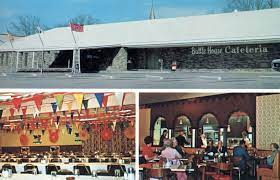
In 1960 Lester Inman started selling barbecue at his Exxon station in Llano, Texas, developing a turkey sausage based on a recipe passed down by his wife's grandmother. By 1964, he'd convinced his brother Francis to open up shop down the highway in Marble Falls. Inman's Ranch House Bar-B-Q occupies the front half of a duplex; for years, Francis and his family lived in the back half. When Lester passed away in 1988, the family sold the Llano location and Francis's son, Billy, came into the business. Billy Inman has run Inman's Ranch House Bar-B-Q ever since, buying out his father's share in 1999. Although the family no longer lives in the back half of the restaurant, the location is still the same. Billy, who still welcomes the help of his father, caters to regulars and passers-through, serving up fresh sausage and brisket cooked using direct heat from an oak fire. Like his uncle and father, Billy prides himself on making a quality product at prices working folks can afford. Available by the pound or by the plate, the meat at Inman's is the result of hours of cooking during long days that often begin before sunrise and stretch well into the evening.


Listen to this this 1-minute audio clip of Billy Inman talking about the evolution of the turkey sausage served at Inman’s Ranch House Bar-B-Q. [Windows Media Player required. Go here to download the player for free.]

NOTE:What follows is a portion of the original interview that has been edited for length. To download the entire transcript in PDF form, please click here.

Subjects: Billy Inman with Francis Inman
Date: March 2, 2007
Location: Inman's Ranch House Bar-B-Q – Marble Falls, TX
Fieldwork Director: Dr. Elizabeth Engelhardt
Fieldwork Team: Eric Covey, Melanie Haupt, and Carly Kocurek – graduate students at The University of Texas at Austin
Interviewers: Melanie Haupt and Carly Kocurek
Photographer: Carly Kocurek

Produced in association with the American Studies Department at The University of Texas at Austin and the Central Texas Barbecue Association.

---

Melanie Haupt: Okay, we are recording. So, I am with Billy Inman at Inman’s Ranch House in Marble Falls, Texas. Mr. Inman, could you please state your full name and birthdate?

Billy Inman: My Name is Billy Inman, and I am not going to tell you how old I am.

Okay, fair enough. Okay, so could you give us a little background on how Inman’s got started and just a little bit of insight into the history of the Ranch House.

In 1964 we opened this place up here. At the time my uncle in Llano, Lester Inman, was running Inman’s kitchen over there. He was actually running Inman’s Exxon gas station and selling barbecue off of a catering wagon out at the edge of the gas station and it got to where the catering wagon was making more money than the gas station was and he put us into business here, him and my dad went in. They were brothers. Then about 1965 or ’66 he opened up Inman’s Kitchen in Llano and it still runs today. Uncle Lester passed away in 1988. And when he passed away I bought out his half here, which made me and my dad partners. And Horace and Myrtle Oestreich bought out the other half of Inman’s over there and so we’re not affiliated anymore. We’re still friends and anything they need they can walk through the door and get it. And anything I need I can walk through their door and get it. We’re still friends. As far as being a partnership anymore, it’s not a partnership anymore. But we had the opportunity to buy the building and the land here about eight years ago and I bought my dad out then. But he still comes in and he still helps and oversees. We got a real neat working relationship. He’s, He’s, I don’t know how to say it, he’s good for business. He likes to make candy and stuff at night and he gives it away, he doesn’t sell any of it. And he doesn’t watch TV at night, but he gets in the kitchen and he bakes and cooks and stuff. We opened up in 1964 here. We moved from San Saba to Marble Falls. We had I guess Murry Burnham with the Burnham Brothers calls, game calls, was probably one of our first customers. And he came in and gave us some advice: he said that if you can keep your prices down to where the working man can afford to eat there, you’ll stay in business longer.

I did notice that your prices are quite low. When was the last time you had to raise your prices?

Oh, about a year and a half ago.

And how big was the increase?

A dollar a pound on the brisket. Everything went up and we had to go up. As long as we can make a living and keep our prices down to where the working man can afford to eat here, well, that’s what we’re going to do. Sometimes you feel like you’re not making enough money, but you’re still in business. And I see lots of barbecue places over the years that have gone and come.

So you must be doing something right.

Must be. We try hard everyday.

---

So is Inman’s as an institution, a business, are you fairly active in the Marble Falls community? Is this a hang out for any certain type of people at all?

The working man. I belong to the Masonic Lodge and I’ve done a lot through the Masons and helping kids and stuff. I’m on the board of directors of our stock show where I help the kids showing livestock and animals and everything. I try to do my part in the community. I’ve been here a long time and I don’t do any advertising anywhere except I help kids. I take my advertising money and I buy kids animals at the stock show or if a child wants to show an animal and they can’t afford it, well I’ll buy an animal for them. Kids come in here selling raffle tickets or selling Girl Scout cookies or whatever, well that’s what I do with it. I don’t buy advertising, but I spend it that way. We’ve been doing that a long time.

So do you also rely on word-of-mouth or just your long-standing presence in the community?

Well, forty-two years in business and word-of-mouth are the best advertising that I’ve got. We’ve got people that come through that haven’t been here in twenty years and they’ll stop by and say, “We’re sure glad y’all are still here. We remember that turkey sausage that y’all make.” So it’s word-of-mouth and customers that have been through.

Now how come the sausage is turkey? Why isn’t it pork?

Well, Uncle Lester started the turkey sausage in Llano and it was the cheapest meat that you could make sausage out of at the time. It was cheaper than pork. And he started making sausage and selling it to the deer hunters over there. And it got to where the deer hunters would come back through in the summertime with their families and they’d stop in to the gas station and fill up with gas and want to get a ring of sausage. Well, he only made it during deer season when he first got started. Then he had to pick it up and start making it year-round. And that’s when his business started growing over there. But that’s how the turkey sausage actually got started, was because you could make a cheap product out of something that was good. There are lots of places that make lots of different kinds of sausage and I like to try sausages from other places. The turkey sausage that we make, we make it ourselves. It’s a unique product. I don’t know. We used 26,000 pounds of turkey meat last year. So for a little mom and pops’ store that’s doing pretty good. That’s lots of turkeys.

Do you make that on-site, here, or is there a—

I make it right here in the building. I’ve got a little plant set up in the back room. It’s fully enclosed, to where I can close it up. We make it as we need it and we keep it fresh and we try not to make it and freeze it and then thaw it out and cook it. We try and make it and sell it fresh and kind of do it that way. It does a better job and it keeps your product fresher and better for you.

Where do you get your turkeys and where do you get your brisket?

Well, I buy my briskets from either US Food Service or Ben E. Keith Food Service. And then I buy my turkeys from Ben E. Keith Food Service. They, it, come boneless/skinless and it comes in forty-pound blocks where it’s already been USDA inspected and everything. It’s safe you know, that way. We, I used to go to Waco and buy it, but when Ben E. Keith came in with the service that they could provide it for me and deliver it to me, then that was a whole lot better than me having to drive to Waco and kill a whole day to run up there and get a thousand pounds or two-thousand pounds of turkey meat. So we started buying it from Ben E. Keith Food Service. [Francis Inman enters]

[To Francis] She wants you to tell the story about LBJ’s food list and the Secret Service coming in here and inspecting you.

Francis Inman: We had an inspector come in here every three weeks—a state inspector inspecting this place. And he came in for a while and finally one day he said “I guess you want to know the reason why I’m coming in here so much for”. I said, “I sure would. I watch you and you don’t stop anywhere else in town”. He said “You’re on the list for LBJ to get food from here”. He was a real nice fellow. Shooks was his name. So that’s how we got food for the President. We was on the list of his food. When he came home people stirred around and throwed more barbecues every time he came home.

Did you ever meet him?

No. I met his doctor. His doctor came in one time. His doctor came in, and he wanted some sausage to take back with him. Well, he came in and I didn’t have any. I had to take his address—he worked in D.C.—and mail it to him. I mailed it to him and he sent me a check. And I kept the check in here to show people that he actually bought it here. [Laughter] He wasn’t going to give me any deal. We’ve had a good many governors in here. The Governor right now, he’s been in here.

---

FI: We’ve had lots of Texas Rangers in here.

BI: Way back when it was cowboy and horse day they’d come in and they’d pull up and it’d be five or six trucks out there with horses and loaded up and they’d pull in here and eat and headed out somewhere to go ride a ranch or do something, you know. When I was real young you’d see lots of that kind of thing. We’ve had the Railroad Commission meet at the table in there and discuss our railroad system up here. I guess this business is like everybody else’s, you’ve always had lots of famous people. But I try to treat everybody as they’re going to spend the same money in here as the next person is, so whether they’re the lowest working man on the totem pole or the tallest one on top of the flagpole, I try to treat them all the same. Because they’re all going to spend the same amount of money.

True enough. True enough. Well, let me ask you a little more specific questions about your process here. What time do you start cooking in the mornings?

BI: Oh, we try to get here about five-thirty or six. And we try and get everything on. Those pits have fire in them and they run just about twenty-four hours a day. So they’re cooking, they’re cooking, all the time. It’s a pretty good process, but lots of people nowadays they’re going to these electric ovens and stuff to where you can load those ovens at night and they automatically come on at three in the morning and about ten o’clock their briskets are all ready to serve. We’re still the old original wood fired pit and we don’t have all those luxuries of timers and electricity. I might be down here at eight or nine o’clock at night putting more wood on that fire, or whatever it takes to make it all work.

What kind of wood do you use?

BI: We use oak wood. We don’t use any mesquite or anything else. Just straight oak.

And have you always used oak?

BI: Forever.

And where do you get your wood?

BI: We cut it ourself.

Carly Kocurek: With cooking with oak, what’s the flavor that oak gives or how’s it different? Why do you use oak?

BI: You want me to put you a slice of bread on there so you can figure it out? Since you’re a vegetarian.

CK: No, I just want to hear you explain it.

BI: Well, to me if you use mesquite—you’ll see the people that cook with mesquite will have a fire pit out here to where they’re burning it. And then they shovel the coals in to cook with. The outside ring on a mesquite log smells like a creosote telephone pole burning to me. And that’s what they’re burning off out there in their pit. And then they shovel the coals in here. Well, by using oak wood I don’t have that and my fire, my wood, is directly under my meat. And I cook with direct heat. I’m not wasting all of that heat that’s burning up out there. It’s cooking with the oak wood the way we use it here. I like to go when I get into a pasture to haul wood I like to find an old dead tree that’s been dead eight or ten or fifteen years and it’s all white and all the bark and limbs have fell off it. That’s the kind of oak wood I like to use to cook with. Occasionally we find some that’s not that way. But that’s the ideal barbecue wood to me, in my opinion. You’ve got all kinds of different woods and all kinds of different things. We go to New Mexico or somewhere to visit some friends and they want us to barbecue while we’re out there, well, we’ll take apple wood or something.

FI: [Banging wood in background] That’s hard wood.

BI: Oak is one of the hardest woods in this country.

FI: Mesquite is not hardwood. You see a chimney with that black smoke running off a house—that’s burning mesquite. That’s what does that. I don’t know how they ever got started.

BI: It’s the creosote that’s in it, that’s cooking out of it. You’ll see lots of chimney fires and stuff and lots of pits that get on fire with people cooking with mesquite. Unless they’ve got a big burn pit over there to where they burn it and then shovel the coals in to where they’ve burned off all that sap and then it works pretty good. But we’ve always used oak wood and I hope that we can always continue to get oak so that’s what we can use. It’s the hardest wood in this country. If I go to New Mexico or somewhere to some of my friends and I barbecue there, well we use apple or whatever the hardest wood is. You know, you go to Missouri or somewhere you use hickory. That’s the hardest wood around. And that’s usually what does the best job at doing your barbecueing.

FI: We make everything from scratch. We pick and clean our own beans. We make our own barbecue sauce. We make our own slaw dressing. We make our own sausage seasoning. We make everything from scratch. We don’t buy nothing ready-made.

MH: And whose recipes are those? Are those your recipes?

FI: Our old recipes.

MH: That’s impressive. You don’t see very many people doing that these days.

BI: No, not these days. They pour beans out of a gallon can and warm them up. Put a little seasoning in them and here you go. We grind our own cabbage and we mix our own slaw dressing. I mean we do it all. It’s all made from scratch. There’s not many places anymore that make everything from scratch.

---

MH: Is that how you keep prices low? You use family labor?

BI: Sure. You make your money when you buy your groceries. So you want to buy them as cheap as you can buy them. But I’ve got to buy it right in order to make a living at it. And by buying it right I can afford to keep my prices down. Like now I’m getting seven dollars a pound for my brisket. If I was getting ten or twelve like they do in Austin I could afford to give a dollar eighty a pound or two dollars a pound for brisket, like most of them are paying down there. But by me selling it for seven dollars I have to jew on them pretty hard and this week brisket prices were a dollar forty-one. Brisket prices change every week, just like the commodities market. That’s the reason I say I either buy from US Foods or buy from Ben E. Keith. If both of them get too high, I might buy from Wal-Mart. There’s not but four or five packers in the United States that make all the brisket so the quality of the brisket’s not any different. It’s just the brand that you buy. You’re going to buy one of those four or five brands and it doesn’t make any difference if you get it from Wal-Mart or you get it from a food service, it’s all the same.

MH: So, you have one child?

BI: Yeah, I’ve got one daughter.

MH: Your daughter. Is she interested in participating in the family business at all?

BI: I hope not. [Laughter]

MH: So what is your plan for retirement? What’s going to happen to Inman’s then?

BI: I have no idea. I’ll probably sell it to somebody or I’ll close up. One of the two.

MH: So why do you hope that Ashley, Ashley is her name, correct?

BI: I hope that she gets an education and makes some money with her mind instead of her back.

MH: That’s, well, that’s a fair enough reason. So what are the most important steps in making your brisket and sausage?

BI: The fire. Quality control on the fire. Checking your meat and making sure it’s tender and you don’t overcook it or you don’t undercook it. Sometimes it’s tough. With the genetics and different genetics in cattle some briskets cook real fast and some of them cook real slow. Some of them are going to cook out tough. I don’t care what you do to them. So you can’t say that you can do a good job on all of them. Because I can’t do a good job on every brisket. Every once in a while you are going to get one that’s so tough that you could grind it up and the hamburger meat would be tough, I think. [Laughter]

FI: Cooking brisket is just like cooking at home. You don’t get everything cooked just right at home either. [Laughter]

---

MH: What’s the best way to eat your sausage? Plain, wrapped up in bread, rolled in a tortilla?

BI: Well, I don’t sell it rolled up in a tortilla. I sell it by the pound. I sell it on a slice of bread and I call it a sausage wrap. Or I sell it on a sandwich and I slice it and it’s a barbecue bun, like I put barbecue sauce on it, like it’s on a bun. Or I sell it on a plate. I’ve got lots of folks who eat it lots of different ways. I’ve got folks that come in and buy it by the pound and they take it home and get their crockpot of beans nearly finished and they’ll chop the sausage up in little bites and put it in it. It’s a unique product. … It’s pure turkey meat. The only thing pork is the casing that it’s stuffed in. But there’s no nutritional value there. There’s no fillers, there’s no by-products. And it is pure turkey meat. A lot of times, we have folks that have been in here and we have a hard time getting them to try it because they’ve had turkey sausage or something out of the grocery store or out of another place and they didn’t like it. Then when they come in and try this, then it’s a different story because it’s a unique product.

---

MH: How old were you when you started working for the family business?

I was four years old when we moved here and opened this up. I worked throughout school. I’d come in to work here. And then when I got out of school I decided this wasn’t what I wanted to do and I went to welding school and majored in welding. And I got out and I welded for lots of rock quarries and gravel quarries and stuff around here and I welded for myself a little bit. Dad said “I’m going to close that place up if you’re not interested in it,” and I got to thinking you know in the summertime you’ve got a roof and fan and in wintertime you’ve got a roof over your head and a heater and it’s a whole lot better than sitting out there burning up and freezing up. So I came in and started working for him in about 1986—again. The next time around. Then about ’88, 1988, Uncle Lester passed away and then I went in as a partner.

-----

MH: Who’s your biggest competition, barbecue-wise, in the area?

There’s another barbecue place, Peete Mesquite. As far as being competition, I don’t consider him competition. He does a lot of things like cooking the pork and chicken, and other things I don’t do here. He sells brisket and sausage too, but he doesn’t sell the turkey sausage. So I don’t really look at him as a competitor, he’s just in the business with me. As far as having competition, there’s nothing in town that, that’s—there lots of barbecue places that have come and gone and there’s lots of barbecue places in the area that serve good barbecue. But as far as seeing them as competition, I don’t see them as competition. We’re a unique place, to where we make everything from scratch and we do everything from scratch. We make our own sausage, we cook our own brisket, we make our own sauce. When you’re doing it that way, nobody wants to do it the old-school way.

------

So how has your kind of clientele changed as Marble Falls has changed?

I would probably say now, when we feed the working man, we’ll have a contractor come in and he’ll say, I’ve got ten guys. I need brisket and sausage and sauce and pickles and onions and bread for ten people. And we’ll fix up a big order like that, where twenty-five years ago, the man that was pouring cement had one other guy with him and they’d knock off for lunch and come to town and get a plate lunch or something. Now then, everything’s the hustle and the bustle and we don’t want them to leave, we want them to stay on the job and work. So the contractor runs to town while everybody else is pouring the cement and he gets lunch for them and when they’re waiting on it to set up, well then they stop and eat lunch. The framing contractors and stuff, a lot of them do the same thing. A lot of the builders, when they get pretty close to finishing a home, they’ll invite all of the subs and everybody in to a meal and they’ll come in. We’ll fix for twenty or twenty-five and they’ll come pick it up and take it out to the job site. There’s a whole lot of pick up and go like that. [Pause] With the people in a bigger hurry today than what they used to be, I’d probably say I sell more sandwiches today than I used to. Versus I used to sell more plates because the working man would come in and sit down and eat, and then get up and go back to work. Nowadays they’re getting a sandwich and they’re going on the road and running back to the job to go back to work. I’d have to say that’s probably the difference.

I did notice that there’s some new construction when we came in on [Highway] 281, there are some kind of big houses being built. You’re smirking. I’m guessing you’re not a fan.

Well, I think it’s going to be good for the economy. We’ve got lots of development going on in the area. They’re supposed to build a new subdivision out here at the [Highways] 71 and 281 intersection that’s gonna to be like fourteen hundred acres. It’s gonna have big box stores and the whole deal in it. They’ll put a hospital, an eighty-bed hospital out there, they’re looking at. When they get all that done, you know, we’re gonna bust at the seams. We’re busting at the seams already, but it’s gonna be lots of room for expansion. There’s lots of big subdivisions and stuff that are growing and taking off, so—

What’s your favorite part of running Inman’s Ranch House?

Being my own boss. I’ve worked for other people, and it’s just easier to be my own boss. I guess meeting all the people and visiting with everybody that I see that comes in, you know. And I’ve got lots of friends that come in and visit. One of them will come in and get a sandwich and sit back here and talk while he eats. That’s probably the best thing about owning your own business, is your friends and the folks that come through. And the new folks that comes through that you get to meet and make friends out of.

---

To download the entire transcript in PDF form, please click here.


bottom MENU

Introduction | Interactive Map | Oral Histories | About & Contact | More Trails...