
| LEO & SUSIE’S
FAMOUS GREEN TOP BAR-B-QUE
 |
| Two interviews, from Susie Headrick
and Richard Headrick, are featured
on this page.
Jump to Richard's
interview. |
Susie & Richard Headrick
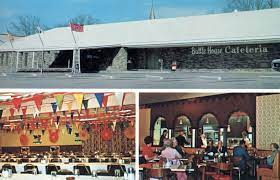
Leo & Susie’s Famous Green Top Bar-B-Que
7530 Highway 78
Dora, AL 35062
(205) 648-9838
“When we first got it, it had one little pit out there.
And it’s covered up now by the cabinet where the coffee pot and
all that [is]. But we’ve got three huge pits now. And it just started
growing. When we had been here just a little while it started growing.”
— Susie Headrick
In 1951 the new Highway 78 cut through Dora, Alabama. Businesses
began dotting the roadside to catch travelers on their way into Birmingham.
One of the first to open its doors was the Green Top. Popular for its
barbecue but better known for its beer, the Green Top was an oasis in
a dessert of dry counties.
In 1973 coalminer Leo Headrick saw an opportunity to get
out of the mines, make a good living, and work alongside his wife Susie.
They, along with their sons Richard and Preston, bought The Green Top
and put everything they had into the place. But it was Susie who taught
the rest of her family about barbecue. And it was Susie who corralled
their roadhouse clientele and helped the Green Top evolve into a family-oriented
place. Eventually, they expanded their menu and the building, as well.
Today, the Green Top sells far more barbecue than beer. Leo passed away
in 1997, but Susie is still at the helm. Richard still makes the sauce
and his son, Tony, is now the third generation to the work the pits at
the Green Top.
Listen
to this 4-minute audio clip
of Susie Headrick talking about when she and her husband, Leo, bought
the Green Top Cafe. [Windows Media Player required. Go here
to download the player for free.]
NOTE:
What follows is a portion of the original interview that has been edited
for length. To download Susie Headrick's entire interview PDF form, please
click here.
Subject: Susie Headrick
Date: September 29, 2006
Location: Mrs. Headrick’s home – Dora, AL
Interviewer: Amy Evans
---
Amy Evans: This is Amy Evans for the Southern Foodways
Alliance on Friday, September 29th 2006 and I’m now at the residence
of Mrs. Susie Headrick,
which is behind Leo and Susie’s Famous Green Top Café. And
Mrs. Headrick, would you please say your name and your birth date for
the record, please?
Susie Headrick: My name is Susie Headrick. And I was born June 18th 1922
in Sipsey, Alabama.
So tell me then how you met your husband, Leo Headrick.
Leo and I met in high school. He was a football player and I was a cheerleader,
but I didn’t date Leo then. He was dating somebody that was a little
bit older than me. And after we graduated from high school, he was dating
a girl across the road. And I had a date with his brother [Lincoln Headrick]
but this girl, she couldn’t go out with him the night that he had
a date with her, and I decided to not date his brother. I had heard that
he was a little bit fast, so I didn’t date him.
And now how long did you and Mr. Leo date before you got married?
We didn’t date but about a year and about six months of that he
was gone to California taking a course that would help him when he got
in the Army. Or he would—might have been taking the course thinking
he wouldn’t have to go, but he did have to go in the Army, but he
took this course and it was a welding and learning things about airplanes.
---
What year did you and Leo get married?
Oh, let’s see, 1942, yeah. 1942 yeah.
And you mentioned before we started recording something about you were
working at a drugstore. Was that when y’all were married?
Oh, yeah. Oh, first I worked at the little grocery store that sold everything,
and then I worked at another grocery—well it was a store that sold
everything. But then I quit work and had the two children [Preston and
Richard], and then I went to work in this drugstore and worked there nineteen
years. [I was a] good pharmacist.
---
Okay, so you were doing this while your husband was working in the
coalmines?
Right. Yeah, and I was doing that while he worked in the coalmines.
And I understand from your son [Richard] that his family
has been in the coal business for a really long time.
Right, his family had a little coal mine, yeah.
Can you talk a little bit about what that was like for him and—and
what his days were like?
Well he liked it; and he was kind of well boss at you know—at their
little coal mine and the bookkeeper. He was a bookkeeper, yeah; he was
smart in figures. He could always add up the money without an adding machine.
I wasn’t that smart; I needed the adding machine, yeah.
I understand you did the books or still do the books here at the Green
Top?
Well I do—[Laughs]—I keep up with the money. Yeah, I keep
up with the money. I check their deposits and make their change up for
the day and for the night and see if all the money is there, and I take
it to the bank.
So can you tell me again what you were saying earlier about what you
thought when your husband decided to purchase the Green Top?
Well I thought he was an idiot. And I didn’t want to be a bartender
and I—I’m a good cook, but I didn’t want to cook in
a restaurant, but he came in the drugstore where I was working and said
he wanted to buy it and later come and said he was going
to buy it whether I wanted him to or not. I didn’t see myself as
a bartender and I didn’t—I didn’t know how to cook in
a restaurant. That may not—I had to learn that and it was a lot
different thirty-some years ago than it is now. But when we first bought
it, well, it was kind of—it was kind of rough, and some people called
it a beer joint and I never—I never did want them to call it a beer
joint, though, but I learned to cook in the restaurant. And my husband,
he worked on the day shift, and Richard and I usually—we worked
at night and sometimes I’d have to straighten people out.
Is it true that you kept a big old stick behind the bar?
Yeah, I did that and at that time it had a different kind of machines
in there, you know, that you could play on, and people would about want
to, you know, bet a little money on it and they might get mad at each
other. And eventually, we got rid of them. And on Thursday nights we’d
have a big crowd from Jasper from the college [Bevill State Community
College], and they’d sing and dance and have—and my husband,
he—he always sang a lot especially when he had him several drinks.
Sometimes I’d sing with him, but most of the time I was too busy
trying to keep everything going. And when Jasper went wet—and I
forgot what year that was—we got more into restaurant business.
We still sell alcoholic beverages, but we sell more iced tea than we do
that now. And back then, the restaurant was on the outside and, of course,
we added a lot to it in the years. So it just kept through the years getting
more like a restaurant than it was when we bought it.
So why do you think that your husband wanted to purchase the Green
Top in the first place?
Well he was tired of working in the coalmines and he thought that—well,
he was—he was about, I guess he was about fifty-five [years old].
Well he wasn’t fifty-five; he was in his early fifties. But he was
looking forward to when he’d become fifty-five he could retire from
the coalmines, and he just thought he’d like a restaurant better
than he did working in the mines. And he said I had to—I’ll
not use the word—he said that I helped to make one son of a gun
rich and it was time that he helped—that I helped him in—in
a business. He was referring to the nineteen years that I had worked at
the drugstore. The man I worked for was rich. [Laughs] And if I had been
a little smarter, he would have sent me to college to be a pharmacist.
I’m a good store clerk, a good PR person, yeah.
I believe that.
But hey, I wanted to help. I always did the dirty work, too, you know.
That amazes me that these people, you know, don’t want to pick up
a cloth and clean the windows and, you know, I always have to do that,
yeah.
Well and I understand when you first purchased place you really didn’t
have any employees; it was just the family pretty much running it.
Pretty much, yeah.
And the Green Top’s known as a barbecue place. Was your husband
confident that he could carry on the barbecue tradition?
Yeah. When we first got it, it had one little pit out there. And it’s
covered up now by the cabinet where the coffee pot and all that [is],
and it had—but we’ve got three huge pits now, yeah. And it
just started growing. When—when we had been here just a little while
it started growing, yeah.
Well and your son [Richard] was saying earlier that he pretty much
learned everything about cooking from you—even how to cook the barbecue?
Well he’s learned a lot from me, yeah; he’s a good chef. My
husband and my older son [Preston] was great PR people. And they did everything.
But Richard and I had the rough shift at night and we’ve learned
a lot together out there, yeah.
How was that decided on that your husband would work the day and then
you and Richard would work at night?
Well I’d always had a dayshift job and cooked for the family that
much—and I liked being able to go to the bank and going to the grocery
store and I liked working at night, yeah.
Do you have some stories that you remember from the early days working
at night?
Well I’d work at night and a lot of times back then we had a jukebox
and they’d—after we’d close the grill up and there’d
be some in there that would still be drinking, and a lot of times we’d
dance, you know, and there’s a guy that he still works there, but
everything that went on, he would come in the next morning and when Leo
would get up to open it up he’d—he was the night watchman
[Laughs] and he’d tell him everything that went on, yeah. He did.
But I just always—I just liked to work at night, yeah.
---
So tell me what the restaurant has meant to you after being in it for
so long.
Well it’s like I told you while ago, my husband made two good decisions
in his life, and the first one was marrying me and then the next one was
buying the Green Top. Through the years I’ve had a lot of good friends
out there and it’s been hard work, but it’s like I told them
if—if I hadn't gone into the restaurant business, I’d have
to be on Welfare now. I may not have a good living; I never have got rich,
now, but I do have a good living. And it’s fun at my age; I can
go out there and there’s people that came here—came out there
when they was young and their mouth will fly open, they’re so excited
to see me at my age. And they hug me and give me a peck on the cheek,
and it’s just a joy to know that—that you’ve had that
many friends in your lifetime, yeah. [Excited]
And what do you think now about your grandson, Tony, being so involved
in the business?
Well
I think that’s good for him. I guess that’s all he’s
ever known, see. So that will be something that, if he hangs in, that
he’ll have when he gets older, yeah.
Before your husband passed, was he hopeful that his grandson—that
Tony would stay with it and keep it going?
He didn’t work that much then. He’s been dead nearly ten years.
Well I imagine it would, you know, it made him happy that he was working
out there because the—about the time he got real sick the older
son [Preston] started preaching so yeah, he was glad that somebody in
the family was going to help out, yeah.
Well then tell me about living just ten steps behind the Green Top.
How long have you had a house back here?
When we first came down here, people was bad to break in around—so
there’s a little building behind the Green Top, and we put us a
bed in that and we would night-watch—sleep out there and go home
in morning. But then we decided that that was too much trouble and we
decided to buy a trailer and put it behind; that’s what this is,
except we built onto this, yeah.
And have you liked living behind the restaurant all these years?
Yeah. Yeah, I like living here because I could always go out there and
check on things. If they needed anything, I could take care of that. And
I like it now. I go out—well I usually go by when I’m going
to the bank and leave them their change for the day, and then when I come
back from the bank, I always take the deposit books back out there and
look around. And if somebody is in there that I want to talk to or speak
to—and I get me a Sprite and come home and eat lunch. And I usually
cook for me and Richard or anybody else that drops around. And then about
seven o’clock at night I go back out there and sit and talk to different
ones.
---
What do you think about that likeness of you and your husband that’s
on the sign out on the highway? What do you think about that?
Well I think I looked better [Laughs] than that picture, but I don’t
know. I guess it pretty much tells what I look like, yeah.
Well and Richard was saying that y’all named this Leo and Susie’s
Green Top pretty much after you bought it. Is that right?
Yeah, [the] lady that we bought it from [Edith Carey], she didn’t
much like it when we said Leo and Susie’s Green Top because when
she had it, it was just Green Top. And she was down here and she said,
“Well why did you do that?” And I said, “Because I want
to know who’s—I want my friends to know who’s running
it and who is in charge here,” yeah.
But do you have any final thoughts about your decades in the restaurant
business and your family carrying on?
I
have a lot of treasured memories. [Emotional] And that’s—you
know, you think about all the good things that—that you did, you
know, and when we first came down here, why I didn’t have a whole
bunch of stuff myself.
But there was a girl that was a go-go girl over to a place
on the other highway, and they had run her off, and she come in
the restaurant hungry, barefooted. And she asked Leo if—if he could
get her a pair of shoes. So I didn’t have many, but I helped—me
and her had the same size foot. And I gave her a pair of shoes, we gave
her something to eat and gave her the money to get to Birmingham. So there’s
been some bad things, you know, that—that I wasn’t too crazy
about, but then I think about [Emotional] the good things that has happened
that is treasured memories.
---
To download Susie Headrick's entire interview PDF form,
please click here.
Richard
Headrick
Leo & Susie’s Famous Green Top Bar-B-Que
7530 Highway 78
Dora, AL 35062
(205) 648-9838
“We didn’t have what you would call a pitmaster
back in them days…Whoever was walking by the pit, if you saw the
fire getting up close to the meat, you took and you put a little water
on it and went on about your business…And Mother, she taught me
what I needed to know about when a shoulder was done.”
—Richard Headrick
Listen
to this 2-minute audio clip
of Richard Headrick talking about the early days of the Green Top Cafe.
[Windows Media Player required. Go here
to download the player for free.]
NOTE:
What follows is a portion of the original interview that has been edited
for length. To download Susie Headrick's entire interview PDF form, please
click here.
Subject: Richard Headrick
Date: September 29, 2006
Location: Leo & Susie’s Famous Green Top Café –
Dora, AL
Interviewer: Amy Evans
---
Amy Evans: This is Amy Evans for the Southern Foodways
Alliance on Friday, September 29th 2006, and I’m with Richard Headrick
at the Green Top Café in Dora, Alabama. And Mr. Headrick, would
you please introduce yourself for the record and say your birth date,
too?
Richard Headrick: My name is Richard S. Headrick. I was born in 1951 on
October 17th. I’ll be fifty-five in about three or four weeks—two
or three, anyway.
Well happy almost-birthday to you. And you were mentioning when I got
here that the anniversary of the Green Top just happened a few days ago.
Yes, September 22nd 1973 is the day we bought this from Edith Carey. It
was—we’ve had it thirty-three years this week. And Edith Carey,
she bought it from Alton and Kenneth Cook in about 1959. The business
was established in 1951 when they put the new highway—the new 78
Highway through, which is about a mile from the old 78 Highway. There
were a lot of establishments already on the old highway because from the
Jefferson County and Walker County line to Mississippi and to Tennessee
it was dry, and you couldn’t get alcoholic beverages. And so people
came from all over west Alabama over to this part of the country to do
their drinking and whatever. And the Green Top Café was the first
business on the new highway.
And when Edith Carey had the place, did they serve barbecue then also?
Yes, they’ve served barbecue here since 1951. They served barbecue—the
original owners served barbecue here. And that’s always been an
eating establishment. When we bought this from Edith Carey, you had two
items and that was barbecue sandwich and a cheeseburger. And—or
a hamburger. And we’ve broadened the menu and to include a lot more
items now, but most of it centers around the barbecue sandwich. That is
what our specialty is.
Do you know when Edith Carey had the place, if she was doing the barbecue
herself, or if she had a pit master or how that worked?
Well the barbecue pit, when we bought it, was right out in the front area
there, and it would hold fourteen shoulders. And she would barbecue maybe
two or three times a week. And what you did was you had a bucket of water
there with a pail in it, because we used that for several years after—for
a few years after we bought it. But the pit got old. But you had a bucket
of water there, and you would just walk by and you’d take the little
stick with the little pail on the end of it and you’d put a little
water on the fire to keep it from getting up into the meat. And then you
would turn them about every hour or so, so while you were working behind
the bar, you were also cooking the barbecue. And we did that oh, for a
year or two, and then we built a pit outside and cooked it out there.
And then in about 1977 we re-did the kitchen and included a pit down there.
Then we added another pit in 1985 to increase capacity, and then in ’97
I tore down the original pit and added two more pits, so we have three
pits today. And—which gives us enough capacity that I could cook
125 shoulders a day, if I had to, but we don’t have to do that.
Now Leo and Susie [Headrick] are, of course, your parents. And you
were talking a little bit about back in your family history…So you’re
like the fifth or sixth generation of Headricks right here in this little
stamp of Dora and the surrounding area?
That would be about right, yeah. Yeah, they were coalminers. My granddaddy
worked in the coal mines and up in—right in the Empire and Sipsey
area. And my daddy and—and his brothers they worked in the mines
when they were children and all through high school. And Daddy worked
in the mines for about forty years. And when he bought this [The Green
Top Café] in 1973, he worked in the mines about another five or
six years. We both worked in the mines while we ran the business. He would—he
would come home—he would work the owl shift, and he’d come
in here and work from 8:30 or 9:00 ‘til 5:00 [in the morning]. And
I would work the day shift, and I’d work from 5:00 ‘til 1:00
[in the afternoon]. And we did that ‘til he retired and I give it
up, too.
What in the world, then, got your father—gave him the wild hair
to get into the restaurant business?
He came home one day; it was on a Saturday evening, he came home. And
I lived in a trailer right beside their house, and I was there. And he
come in and told Mother, said, “We’re—we’re buying
the Green Top Café from Edith Carey.” And she liked to went
through the roof, you know…She’ll tell you that it’s,
you know, was the best move that he ever made for her, you know. And that—so
we came down, I think, on the Monday and signed the papers, and we paid
her 600 dollars a month for—we were going to pay her 25,000 dollars
and pay her 500 dollars a month until it was paid for, but we didn’t
have enough money to really buy the stock. So daddy gave her 600 dollars
a month, which I think ended up being somewhere around 30,000 dollars.
And then we borrowed 1,000 dollars on my [nineteen]’68 Chevrolet
to be in business with. And we ran it ourselves, and nobody received a
payday for several years, you know, because we had other jobs. And that’s
how we got started here.
Did you, as a family, come here as customers?
Yes. Wes, I’ve been coming here since I was knee-high and before.
When we were—if we ever went to Birmingham, I don’t think
my Daddy didn’t pass any of them he wouldn’t stop at. [Laughs]
And—but we—when he would have me or my brother with us, if
we’d come over, this was probably the nicer of some of the other
places, so he didn’t mind stopping here with us too much, you know.
Did y’all like the barbecue then?
Yes, I did. And then, I mean, it’s always had good barbecue. I mean
there were a lot of barbecue places around here back in those days. That
was one of the things they did was they would barbecue—there was
probably three or four more barbecue places over here at that time, you
know, and—you know they were—it was known that you’d
get good barbecue over here in this part of the country, you know. And
but I guess I liked this one the best.
Well when y’all took the restaurant over, was there a learning
curve to cooking the barbecue or did you have somebody here with you showing
you how they did it?
My mother taught me, you know. I don’t know where she learned, you
know, and Daddy. And it wasn’t—you know, we didn’t have
what you would call a pit master
back in them days and you would just—whoever was walking by the
pit, and if you saw the fire getting up close to the meat, you took and
you put a little water on it and [Laughs]—and went on about your
business and kept working, you know. And then you’d turn them, you
know, about every hour, and that’s how we did it then. And Mother,
she taught me, you know, what I needed to know about it—about when
a shoulder was done. And because I had no idea, you know—about everything
I’ve learned in the food business I learned from my mother and—and
through experience through the years. And but she’s the one that
taught me how to do it.
Was your mother a big cook at home?
Oh yes, yes, she loves to cook, and she’s one of the best cooks
I’ve—in the world.
Now how far along into the business did it start becoming known as
Leo and Susie’s Famous Green Top?
Well they kind of put that name on there the day they bought it. They—I
think they were proud that they finally had something. My daddy had, he
had—had some problems in the early [nineteen] ‘50s and—and
he filed for bankruptcy. And when he come out of that and he worked in
the mines, and then when he got his own business again, I think that really
made him proud that he felt like he was back on his feet and—and
doing well again, you know. And so they put the name Leo and Susie’s
Green Top Bar-B-Que on it when the first sign we built, which is not out
there, but part of it is still hanging on the wall down there on the bottom
[floor of the restaurant]. And—and that’s what it’s
been known as ever since.
---
Well, and in the few things that I’ve read about the history
of this place and your family that it was kind of a roadhouse scene in
the early days and, being a wet county and selling alcohol, that it was
a little rough and tumble. And then your mother had a hand in making it
more of a family place. Would you say that’s true?
That’s pretty well true, yeah. It was dry everywhere over to, you
know, plum to Mississippi and to Tennessee and—and it was rough.
And I mean what some people might think was rough, you know, but to a
lot of people it wasn’t rough but—and this was probably when
we bought it was one of the more milder places, you know. And it—it
took us a long time to overcome a lot of that. A long time. And when Jasper
voted to go wet in 1985, you know, everybody thought well, everything
around here would dry up. Well all—I think us and one other place
is all that’s here that was here at that time. But we had already
known that even though we sold a lot of alcohol, you know, we knew we
had a good product in our barbecue, so we just put more emphasis on that.
And from the day we bought it, we never, you know, put up with a whole
lot of anything in here, you know. And no trouble or whatever. And if
we had a problem with somebody, we would just put them out—banned
them—and didn’t let them come back. And after a few years,
you know, I mean basically, the same ones would be the ones that would
be causing trouble everywhere. [Laughs] You knew who they were, and they
didn’t get to come back. So, you know, first thing you know—you
know, you don’t have all that problem, and so now we’re more
known as a family restaurant. And that’s a lot better on your nerves,
too, you know. And, you know, alcohol is just a small—small part
of our sales really now, and I guess less than seven-percent. And pretty
well that’s the way I like it.
---
Can you tell me a little bit about your father? He passed in 1996,
is that right?
Yeah. [Nineteen]’97, I think. December 14th 1997. Well, he was a
character. He used to like entertain, sing, tell stories, and he was the
entertainer of the family. And a lot of people liked to come out around
and they would—he had his crowd that enjoyed hearing him tell about
the Knights of the King’s Castration and bring a guitar along, and
he’d sing with them and do a lot of stuff like that while we were
building the business. And Daddy had a lot of friends, you know, at his
funeral. It was a lot of people here and a lot of people, you know, knew
Daddy from the years and years that—when he would come out before
he bought this place, you know. Daddy might sing at the All-State Club
every now and then and whatever with JC Rainer, you know. And so Daddy,
he liked to entertain people when they’d come by. I’m a little
more shy than that, uh-hmm.
---
So you’ve always been interested and involved since the beginning,
since your parents got the Green Top?
Yes, me and mother is the only two left that’s been here since day
one, and she’s eighty-five [years old] and she still does some work,
yes. She still contributes. She—she checks all the deposits and
gets the change ready and does all the banking business and stuff of the
nature. She does real good to be eighty-five. She may not want me telling
that age. [Laughs]
Well has your role changed since you started? And, you know, what were
you doing back then and how is that different from what you do now? If
you could talk about that a little bit.
Yeah, when I first started here, I was the waiter—waiter, bartender,
bouncer. Me and mother worked together at night and she would—she
would cook and make the sandwiches in the back and help me out front in
between time, and I would wait
on them and—because it was just me and her and my brother. And my
daddy worked in the daytime. And we had a woman by the name of Hazel Johnson.
She was our only employee at that time, and she would cook and make the
sandwiches and also wait them because you—you had multi roles because
we didn’t have enough, you know—didn’t have enough business
that—to staff it like we do now. And but poor old Hazel, she—her
and—we had another lady; she helped mother some at night, Ervil
Suchey. You know, and Miss Suchey was a very good cook. And even though
Mother is a good cook, she taught mother a lot about making barbecue.
She had been making barbecue over in this area for a long, long time.
And so—and Ervil taught me a lot, too. And I won't never forget
Ervil and—nor Hazel, either. I wouldn’t be where I am today
without Ervil and Hazel, too, you know. Never forget them. But basically,
I waited on people and Mother made the sandwiches and you know we—at
night I’d clean up the place and me and her would—and why
we’d go back and stay because Daddy he worked the nightshift, and
we would stay in the little house out back and—and in the morning
I’d get up and go to work in the coal mines. I would have to get
up at five o’clock [in the morning], and so I could be down there
by six or six-thirty. The shift started at seven, and mother would—she
would stay out there ‘til Daddy got here, and he would open it up
at eight-thirty and he would—him and my brother and Hazel would
run it ‘til five in the evening, and then me and mother would take
back over. And that went on for years and years and years and years ‘til
I finally give up on the mines, and Daddy retired. And we thought we could
survive without work—that income, you know.
And you said today that you were making the sauce, is that right?
Yes, I made the sauce today. I made thirty-five gallons today. I make
about 115 gallons a week, sometimes more than that in the summertime.
Business don’t fluctuate as much as it used to in the summer. In
the winter it does a little bit, but I think with the school systems,
the way they do now, that they’re just about going to school year-round
that it don’t fluctuate as much as it used to, and so pretty well
about 115-gallons a week fifty-two weeks a year—that’s about
what I make. And it takes me about—about four hours to make a batch
of sauce and then pour it up and—which I didn’t clean it up.
Today I let Jimmy [Nations, the current pitmaster] clean it up because
I’m going to have a long hard shift tonight. I hope I have a hard
shift tonight, anyway.
Can you talk a little bit about how you make your sauce, without divulging
too many secrets?
Well we start off and make it from scratch, and I make it the same way
mother made it when we started here and—only we make a bigger pot
now than we used to. We used to make it on top of a stove and make probably
two to three gallons at a time, if that much. I can't remember how big
that pot was and now I do it in a—in a forty-gallon steam kettle—steam
jacketed kettle is what they call it. But it is better. You don’t
have the risk of scorching it that way. And it’s a basic sauce that
most, you know—just a basic barbecue sauce that—I don’t
know how to tell much more about that without telling too much. [Laughs]
But it’s got margarine in it and some spices and your basic mustard,
ketchup, and vinegar and Worcestershire sauce, you know, just about like
most sauces and—and some spices. And when you get the margarine
melted, then you start putting your other stuff in it and bring it to
a hard boil, and then I cook it for—I simmer it for about an hour-and-a-half
after I bring it to a hard boil to get it to a pretty good thick consistency.
How would you describe the taste of your sauce?
Well I think it’s the best sauce in the world [Laughs], myself.
You know, the only thing I’ve changed in it in thirty-three years
here, and that wasn’t by choice, was last year we had been using
Crystal
Hot Sauce in it, and it’s in Louisiana in New Orleans and made by
Baumer Foods, and Hurricane Katrina wiped them out. And I don’t
know if they make it, but I switched to Louisiana Hot Sauce. So that makes
the sauce a little hotter and it don’t—some things I like
a little—it’s a little bit different and some things I like
about it better. It don’t give you—but it don’t give
you as much margin for error on your red pepper. You’ve got to watch
that, or you’ll get it too hot. I had a batch too hot this week
that—I eat some nearly every day. I will taste it and I know which
batch it came out of, and I know why I did it or when, you know. And then
I’ll adjust it back down a little bit, you know. But for me, I like
spices, but some people can't eat it as hot as I would like it, you know.
Are you the only one who makes the sauce?
No, my son [Tony Headrick] has made it before and—and Mother, she’s—well
she’s—I won't say—better not say that but she—she
could make it if she had to, I guess, but you know, she’s made her
share of it in her day. My brother he used to make it before he left.
That was his job. And then I took that over for him back in [nineteen]
’96, and my son’s made it off and on. I had heart surgery
last year, and he made it while I was off with the heart surgery, and
he’s made it at times leading up to that—that I wasn’t
able to do it because it can be tiring and hard. But that’s one
of my ways that I contribute still now is by making the sauce, and so
I take a lot of pride in it.
---
How would you rank the sauce as a compliment to your barbecue? How
important do you see that it exists with what you do?
Well I think it’s very key to it because as far as you know, if—there’s
a lot of people that can cook good barbecue meat, you know, and I just
think that it matches the meat better than any sauce than I’ve ever
tried, you know. And I’m sure there’s other sauces out there
that are good, you know, and I don’t really go out and try a whole
lot of them here and there or whatever but, you know, I do read up on
it and study it and all. But I think for the barbecue shoulder and the
barbecue sandwich I don’t think you can make a better barbecue sauce
than what we have.
Well can you talk now a little bit about your process of smoking the barbecue
and what’s important to you there?
Yes, we cook with an indirect—indirect fire. That means that the
firebox is right behind the meat, and we went to that in about 1977, when
we moved out of that little pit that’s out front there. And there’s
a little difference in it. I like the—the other way has some advantages.
But you really got to be on your toes on that one because if you get flame
up into the—into the meat, it’s going to scorch it. The other
is a little more forgiving, you know. It takes about twelve to fourteen
hours. If you cook your shoulders in twelve to fourteen hours, then you’ve—you’ve
done a pretty good job because that—the meat looks—looks better
and tastes better. If you cook it a little less than that, you cooked
it a little too fast and you can't—and it’s all right, but—but
if—about twelve to fourteen hours it’s—is a good cooking
time on it. You’ve done a pretty good job on it, and it will look
good, if you finish it off in that. If you drag it on over sixteen to
eighteen hours, something like that, then I—it just isn't quite
as good as it is, you know. I think twelve to fourteen hours is the—about
the best cooking time on a shoulder.
When you were describing how you upgraded from the pit that was out
front to another pit out back and then an even bigger one, was there a
learning curve in how to get the most out of those pits, or is it pretty
self-explanatory?
Well yeah, we were kind of like learning as we went. My daddy built that
pit. As a matter of fact, right close to where we’re sitting here
[in the office behind the bar area], it was right over there and it was—that
was—that was a window right over there where that door [from the
dining room to the office] is at, and we went outside and come around
here in a little building to turn it—this part wasn’t here.
And the firebox was about right here where we’re sitting. On the
first pit we built like that. And some man from Arkansas showed my daddy
how to—come by and built it for my daddy. And so as we learned on
it, you know. We learned how—how much you could push it and this,
that, and the other and—and how to cook with it and, you know. Well
I’ve burnt up more than one batch of meat on it, and it was trial
and error. And but that was a sweet cooking little pit right there, I’ll
tell you that. Didn’t even have any fire brick in it, and it was
just concrete blocks and—and that was it. And I think we tore it
down, I think, in I believe about ’84—1984. And but it was
a good cooking little pit. And I took those same—same measurements
off that pit and I built the—what I called pit two and pit three.
Pit one I built in 1985 around there, which it ended up—it was supposed
to be the same measurements, but it was built a little bit bigger. And
the guy had it going up and he said, “I made a mistake, and I’ve
made it too big. What do you want me to do?” And I said, “Well
you done got that far with it, just go ahead.” And—and it
cooks all right, but it cooks a little different. Each pit has got its
own characteristics. Pit two and pit three, though, are about the same
size that—that original pit that we had right over there was. And
I’ve got one at my house that’s just like those that we built
over there. I didn’t mean to build a pit that nice over there, but
it was in the early ‘80s. We built it over there at the—because
I’d have to—you can go out and take and you can throw some
concrete blocks—about four blocks high and you can cook some good
meat like that with a bucket of water and a little dipper, and I’ve
done that—had to do that around these holidays. But you’ve
got to stay there with it, you know, and so with an indirect fire you
didn’t have to. So I just built me a pit at my house, where I could
stay up and cook twenty-four hours a day over there without having to
pay somebody, you know, to add in around the holidays that we used to
use. And it’s still there now. But it’s a good pit, too.
---
And so what do you think the future of Leo and Susie’s Famous
Green Top Café is?
Well I think we’ll be around a while. I plan on it being—I
plan on there being a Headrick name on there for another fifty—thirty-three
years to fifty years, you know. I hope we can keep it going and—and
I don’t think—I don’t see any reason it shouldn’t.
I know a lot of people—a lot of barbecue places right now, if you
look at them, and I don’t want to be critical of them because they
do what they need to do, but they use what you call—well I don’t
know what you call them—it’s basically they cook with gas,
and they’ve got a little box on the back and they lay a hickory
chip on it. And we don’t have one of those, you know. Ours is cooked
on the pit. And so, you know, down the road twenty years or so, I don’t
know. Hickory
may be harder to find than it is right now. But right now we have a pretty
good source of it, so usually when they—when they cut the trees
and when they’re pulp-wooding and when they go out and they cut
the timber, there’s only one month of the year—that I understand—that’s
what the guy that gives me wood tells me. And I don’t know that
much about the wood business—but he gets—been getting me hickory
for twenty-something years, Steve Dyes. But he tells me that there’s
only one month of the year that they can use those hickory trees at the
pulpwood plant, and that’s the month of May when the bark falls
off. That the other eleven months—and I do know that when he’ll
bring—I can tell when it’s cut in May, and sometimes you get
some on into June that was cut in the month of May that the barks fall
off the hickory. And that’s the only time they can use it at the
pulpwood plant. Other than that, it’s too hard on the de-barker
or whatever process they use, so the people that cut it will set it aside,
so it gives them a market to use the hickory because they can't be that
selective when they’re going through the woods cutting the—cutting
the trees. So they can—he buys it by the trailer-truckload, and
he cuts it up and he delivers it to me. And I get about three—three
loads of wood a week from him and have been doing it for twenty-something
years.
---
Is there anything that people who haven’t been here to the Green
Top that you’d like for them to know about where you are and what
you do?
Yes, if you want like a barbecue that’s smoked for twelve to fourteen
hours that’s done the old way with a good homemade sauce, come to
the Green Top Café. It’s a nice family atmosphere that’s
been here for fifty-five years now. And it ain’t always been the
same, but it has been since our family has had it, and I hope we’ll
be here another fifty years or so.
---
To download Richard Headrick's entire interview PDF form,
please click here.
bottom MENU
Introduction
| Map Overview | Oral
Histories | About & Contact | More
Trails...
|
 |